
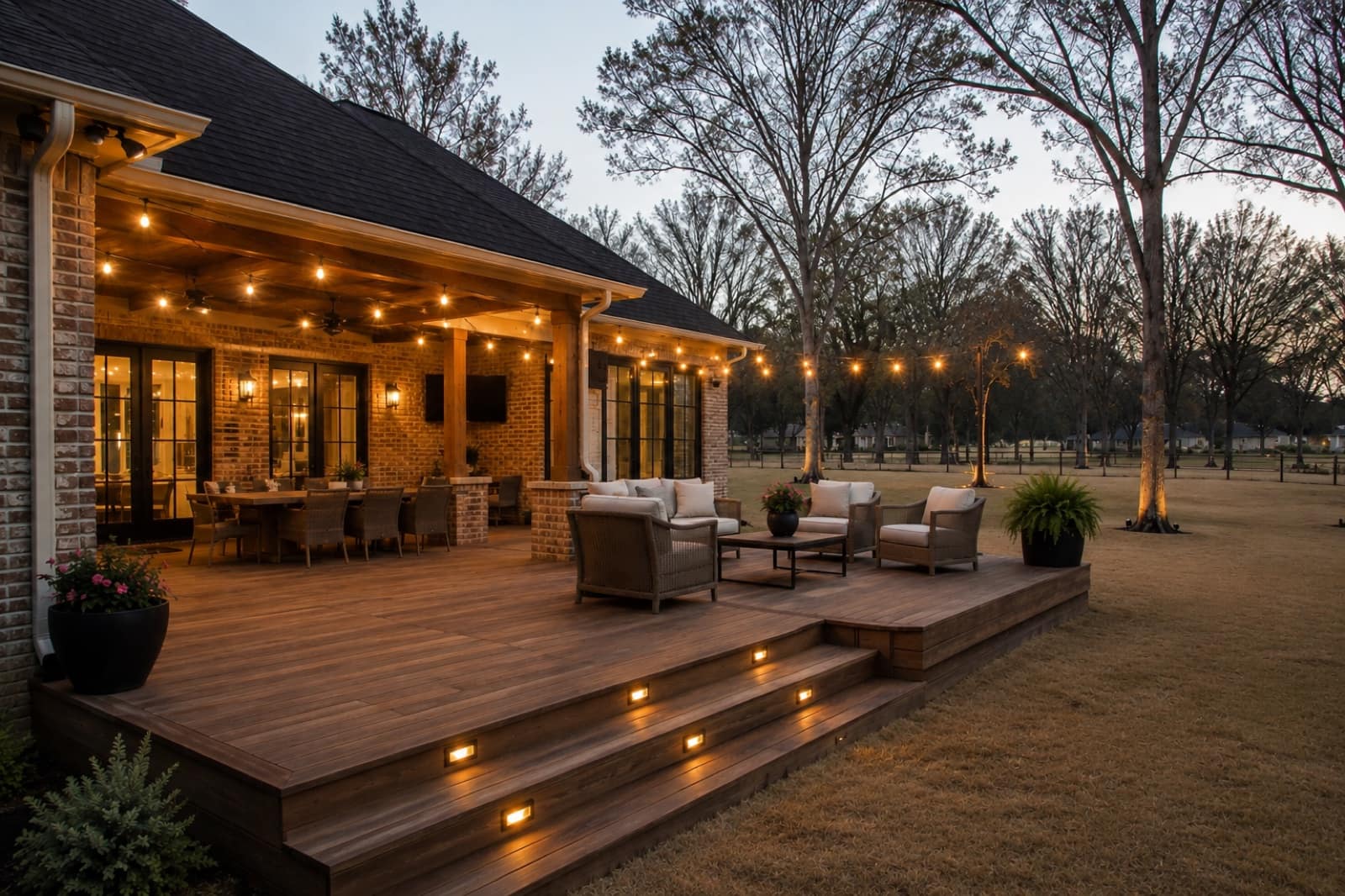
Deck Building in Northern Kentucky
K&M builds decks across Boone County and Greater Cincinnati — footings below the frost line, framing that doesn't bounce, and a finished deck that extends the house instead of just sticking off it. We handle design, permitting and the build. Free estimates, licensed and insured.
Deck work we handle.
New decks
Designed around your house, your grade and how you'll actually use the space — sized for furniture and traffic, not just square footage on paper.
Deck replacement
Tired, soft or undersized decks torn off and hauled away, then rebuilt on new footings and framing. Old fasteners and rotten ledgers don't get reused.
Reframing over a good foundation
Sometimes the posts and footings are sound and only the framing and boards are gone. When that's the case we'll tell you, and rebuild from where it makes sense.
Stairs, railings & landings
The parts that fail first on bad builds. Consistent riser heights, solid stringers, guardrails anchored to framing rather than trim.
Multi-level & walk-out decks
Tall decks over walk-out basements and hillside lots, with the post sizing, bracing and stair runs those heights actually require.
Deck + patio projects
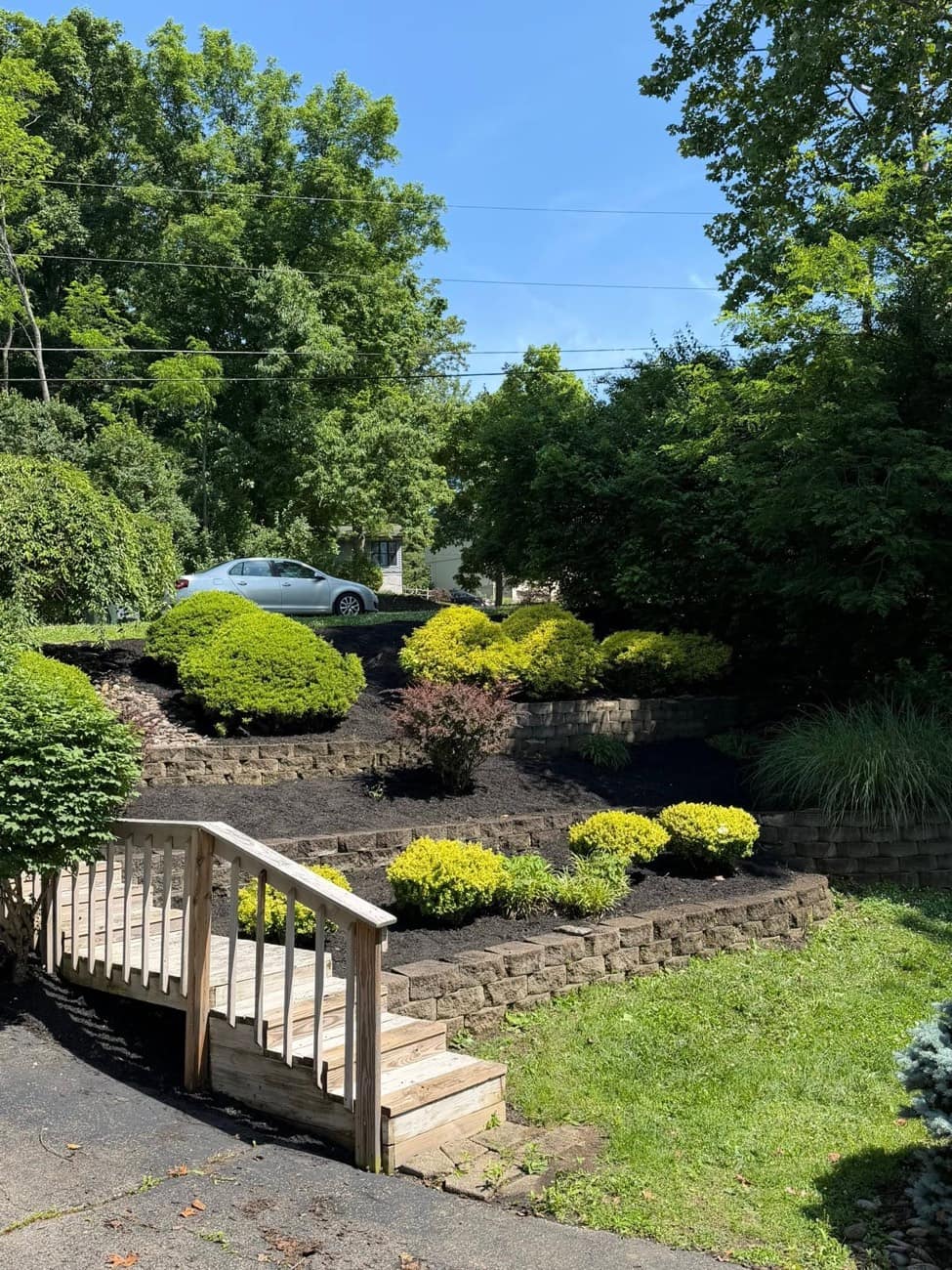
The full outdoor living package — deck, paver patio, retaining wall and grading planned together and built by one crew.
Done the way this ground demands.
A deck is a structure, and around here it lives outside through freeze-thaw winters and humid summers. The ones that sag, bounce and pull away from the house were built like furniture. Ours are built like buildings — footings dug below frost depth, proper ledger attachment and flashing, framing sized for the span — and then finished so it's the part of the house you actually want to be on.
The single biggest reason decks fail isn't rotten boards. It's water getting behind the ledger, the board that bolts the deck to your house. Flash it wrong, or lag it into siding instead of framing, and water runs into the rim joist where nobody can see it. That's the failure that takes the deck down and takes part of the house wall with it. We pull siding back, flash properly, and fasten into structure — every time, on every deck.
Northern Kentucky lots make deck design its own problem. Hillside yards around Union and Burlington and walk-out basements all over Boone County mean a lot of our decks sit eight or ten feet off grade instead of a step down from the kitchen. That changes post size, bracing, stair runs and how much digging happens before a single board goes on. It also gives you a second space — the shade underneath becomes a patio if the drainage is planned for it.
Decks pair naturally with the rest of our outdoor living work. A deck stepping down to a paver patio, with a retaining wall making the grade behave, is one crew and one accountable number — and the levels line up because the same people set all of them. We build across Florence, Union, Burlington, Hebron, Walton and Greater Cincinnati.
Call us when
- The current deck bounces, sways or has soft, spongy boards
- There's staining, rot or daylight where the deck meets the house
- You've got a back door and a drop instead of usable outdoor space
- Railings wobble, stairs feel steep, or the whole thing is failing you on safety
- You're planning deck + patio + wall as one outdoor living project
- An inspector, buyer or insurance company flagged the old deck
From first call to final walk-back.
Free on-site walk-through
We come out, look at the grade, the house wall, the soil and the access. You tell us how you want to use the space. No obligation and no pressure to decide anything that day.
Design and a real number
Layout, height, stairs, railing style and decking material get settled before anyone digs. The estimate reflects your actual lot — access, tear-out and grade included — not a per-foot average.
Permitting and layout
Decks almost always need a permit and an inspection. We handle that with the county, then stake the footing locations and confirm nothing underground is in the way before we dig.
Footings and framing
Footings go below frost depth so winter can't lift them. Posts, beams and joists get sized for the span, and the ledger gets flashed and fastened into house framing.
Decking, stairs and rails
Boards go down with the fastening system your material calls for, stairs get built to consistent rise and run, and guardrails anchor into structure instead of into decking.
Inspection and cleanup
We meet the inspector, correct anything flagged, then haul off the debris and old deck, rake out the work area and leave the yard usable the day we finish.
What it can be built from.
Pressure-treated pine
The most affordable decking and the most common around here. It handles our humidity fine when it's kept sealed, but skip the cleaning and re-staining every couple of years and boards cup, check and gray. Shortest service life of the four.
Cedar
Resists rot and insects naturally, stays cooler underfoot than composite in July sun, and looks better than treated pine from day one. It's soft, so it dents, and it still wants a finish every few years. Costs more than treated, less than composite.
Composite decking
Wood fiber and plastic blended. Costs noticeably more up front and buys back the staining and sealing — wash it and you're done. Won't splinter or rot, takes hidden fasteners, and lasts far longer than wood. Gets hot in full afternoon sun.
PVC decking
All plastic, no wood fiber. The lightest and most moisture-proof option, which makes it a good call for shaded, damp decks where organic growth is the problem. Priciest of the four, and the closest thing to a surface you never think about.
The frame underneath
Whatever you walk on, the structure below is pressure-treated lumber, and that's what decides whether the deck lasts. Composite and PVC are less rigid than wood, so they often call for closer joist spacing — that gets planned before framing.
What drives the cost of a deck
We don't publish deck prices, and you should be skeptical of anyone who does. Two decks the same size can differ by a wide margin depending on how high they sit, what's under them and what has to come out first. Here's what actually moves the number, so you can see where your project lands before we ever walk your property.
Size and shape
Square footage matters, but so does shape. A simple rectangle frames fast; angles, curves, wraps and multiple levels add framing complexity, cuts and waste on every course.
Height off the ground
The biggest hidden driver. A ground-level deck is straightforward. Eight or ten feet up over a walk-out means bigger posts, deeper footings, lateral bracing, guardrails and a long stair run.
Decking material
Pressure-treated pine is the entry point, cedar sits above it, and composite and PVC cost more up front while cutting the maintenance out of your weekends. This choice moves the total more than any other.
Railing system
Wood rails built from the same material as the deck are the economical route. Metal balusters, cable rail and glass panels all cost more, and tall decks need more linear feet of whatever you choose.
Stairs
Stairs are the most labor-heavy square footage on any deck. One short flight is minor; a long run down a hillside with a landing and turn is a meaningful part of the build.
Tear-out of an existing deck
Removing and hauling an old deck is real labor and real disposal. If the old footings can be reused it helps; if they're shallow, undersized or rotted, they come out too.
Site access and grade
Can a truck get material close, or is everything carried around the house? Rock, steep slope and tight side yards all add hours to excavation and framing before the first board goes down.
Wood vs. composite decking
This is the decision most homeowners get stuck on. There's no universally right answer — it comes down to how you'd rather spend money and weekends. Here's the honest version of both.
Wood (pressure-treated or cedar)
- Costs less up front, sometimes considerably
- Looks and feels like real wood because it is
- Stays cooler than composite in direct afternoon sun
- Damaged boards are cheap and easy to swap out
- Needs cleaning and re-sealing every couple of years
- Splinters, cups and grays if the maintenance slips
Composite & PVC
- Costs more up front — that's the real trade-off
- No staining or sealing, just periodic washing
- Won't rot, splinter or feed insects
- Hidden fasteners give a clean surface, no screw heads
- Holds its color and lasts far longer than wood
- Gets hot underfoot on a south-facing deck in July
Deck Building across Northern Kentucky.
Serving within 50 miles of Northern Kentucky.
Deck Building questions.
Anything else — ask on the walk-through. You'll get the same straight answer either way.
How much does a new deck cost in Northern Kentucky?
There's no honest per-foot number, because height, material and site work move the total more than size does. A ground-level treated deck and a tall composite deck off a walk-out basement are different projects entirely. We quote from a free walk-through so tear-out, access, stairs and grade are actually in the number instead of showing up later as change orders.
Wood or composite decking?
Pressure-treated wood costs less up front and looks great when it's kept sealed. Composite costs more and buys back your weekends — no staining, no splinters, and a much longer life. If you know you won't re-seal wood every couple of years, composite is usually the better value over time. Either way, the frame underneath determines whether the deck lasts, and we build that the same regardless.
Do decks need permits in Northern Kentucky?
Almost always, depending on your city or county and the deck's size and height. We handle the permit and the inspection as part of the job, and we'll confirm exactly what applies to your property on the estimate — before work starts, not after. If a buyer or inspector flagged an unpermitted deck, we can help sort that out too.
Why do decks fail around here?
Water at the ledger, more than anything else. When the board bolting the deck to the house isn't flashed properly, water runs behind it into the rim joist and rots the connection from the inside. Second is footings that don't reach below frost depth — our freeze-thaw cycle lifts them, and the deck racks and pulls. Both are invisible until something moves.
Can you repair my deck instead of replacing it?
Sometimes, and we'll tell you honestly. If the footings and framing are sound and only the decking and rails are worn, replacing the surface is a real option. If the ledger is rotted, the posts are undersized or the footings are shallow, patching the top of a bad structure is money spent twice. We'll give you a straight answer on-site.
How long does it take to build a deck?
Most residential decks run a few days to a couple of weeks, depending on size, height, tear-out and how quickly the permit and inspection move. Weather and the concrete for footings set part of the schedule. You'll get a real timeline with your estimate, and we'll tell you if anything changes it.
Can you build a deck on a hillside or over a walk-out basement?
Yes, and it's common work in Boone County — Union, Burlington and plenty of Florence subdivisions are built on grade. Tall decks need bigger posts, deeper footings, bracing and a properly built stair run. The upside is the space underneath, which makes a good shaded patio if drainage is planned from the start.
What is the best decking material for Kentucky weather?
There isn't one best, but there is a best fit. Full-sun decks argue for wood or a lighter-colored composite, because dark composite gets hot underfoot. Shaded, damp decks favor composite or PVC, since wood stays wet and grows organic material. Our humidity and freeze-thaw swings are hard on everything, which is why fastening and gapping matter as much as the material.
Do you build the stairs and railings too?
Yes — and they're where we spend a lot of the care. Consistent riser heights, solid stringers, and guardrails anchored into framing rather than into decking or trim. Loose railings and uneven stairs are the two things that most often show up on a home inspection report and the two things cheap builds get wrong.
Can you do a deck and patio together?
That's some of our favorite work. We build hardscape too, so a deck stepping down to a paver patio with a retaining wall handling the grade is one crew, one plan and one number. When the same people set the deck height and the patio elevation, the levels and drainage actually work together instead of fighting each other.
Tell us what the property needs.
Send it over or call — we'll come look, talk it through straight, and give you a number you can trust. No pressure, no runaround.
Call direct(859) 903-4098- 1
Call or send the form
Tell us what's going on with the property.
- 2
Free walk-through
We come look, talk it through straight, and give you a real number.
- 3
We do the work
Done right, cleaned up, and stood behind.