
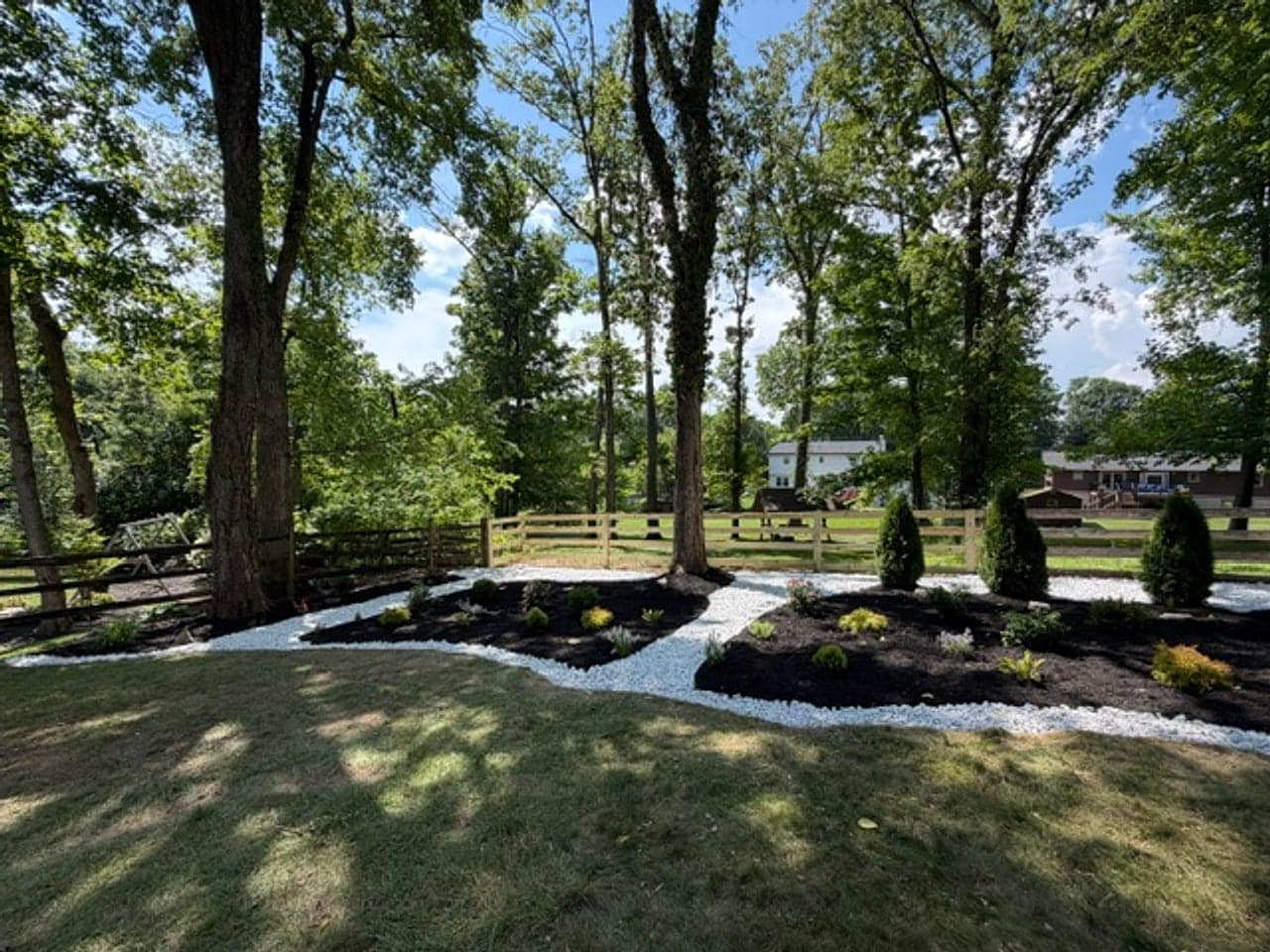
Landscaping & Lawn Care in Northern Kentucky
K&M installs landscaping across Boone County and Greater Cincinnati — bed builds, planting, mulch, edging, decorative stone, and the grading and seeding that fix bare or washing ground. Seasonal cleanups and recurring upkeep are available too. Licensed and insured, family-owned, with free on-site estimates.
Landscape work we handle.
Bed builds & renovations
New beds laid out and dug, or tired beds stripped of overgrowth and failed fabric, reshaped and rebuilt with fresh soil, plants and mulch.
Planting
Trees, shrubs, ornamental grasses and perennials picked for the sun, shade and clay on your lot, and spaced for the size they'll actually reach.
Mulch & decorative stone
Beds mulched to proper depth and pulled back off trunks, or set in river rock and gravel where a surface that doesn't wash away makes more sense.
Edging & bed definition
Clean spade-cut trenched edges, or installed edging where a line has to hold against mowing, mulch creep and washing on a grade.
Grading, topsoil & seeding
Low spots filled, runoff redirected, topsoil brought in and cool-season seed put down so bare and beaten ground grows something again.
Cleanups & ongoing care
Spring and fall cleanups, shrub and hedge trimming, and recurring maintenance for homes, rentals, HOAs and commercial lots.
Done the way this ground demands.
Landscaping around Northern Kentucky is fighting the same two things every time: clay and water. Our soil holds moisture, drains slowly and compacts hard — so a shrub dropped into a narrow hole sits in a bowl that stays wet, and a bed cut into a slope washes its mulch onto the driveway every storm. Work that lasts here starts with what the ground is already doing.
We're an installation crew first: new beds, beds reworked after they got away from the owner, planting for the sun and soil a spot actually has, edging so lines hold, mulch at the right depth, stone, and grading and seeding ground that never took. The clay part matters more than people expect — holes here want to be wide rather than deep, with the root flare left at or slightly above finished grade. Bury a crown in clay and the plant sits in water it can't shed.
Spacing is the other common mistake. A row of shrubs planted at the size it came in the pot looks right for two seasons, then becomes a hedge nobody wanted, into the windows and over the walk. We plant for the size things reach.
We're also the crew that does the hardscape, tree work and grading on the same property, and that's the real difference. When the bed sits at the base of a retaining wall, when a downspout is dumping into the mulch, when a tree has to come out before the planting plan makes sense — it's one team and one number to call instead of three contractors pointing at each other.
Call us when
- Beds have gone to weeds, volunteer trees and fabric that stopped working years ago
- Shrubs planted too close to the house are into the windows, gutters or walkway
- Mulch keeps washing off a bed on a slope and ending up on the driveway
- A wet spot, a bare patch or a strip of dead turf comes back in the same place every year
- A wall, patio, deck or tree removal just finished and the ground around it needs finishing
- A rental, HOA or commercial property needs to look presentable year-round
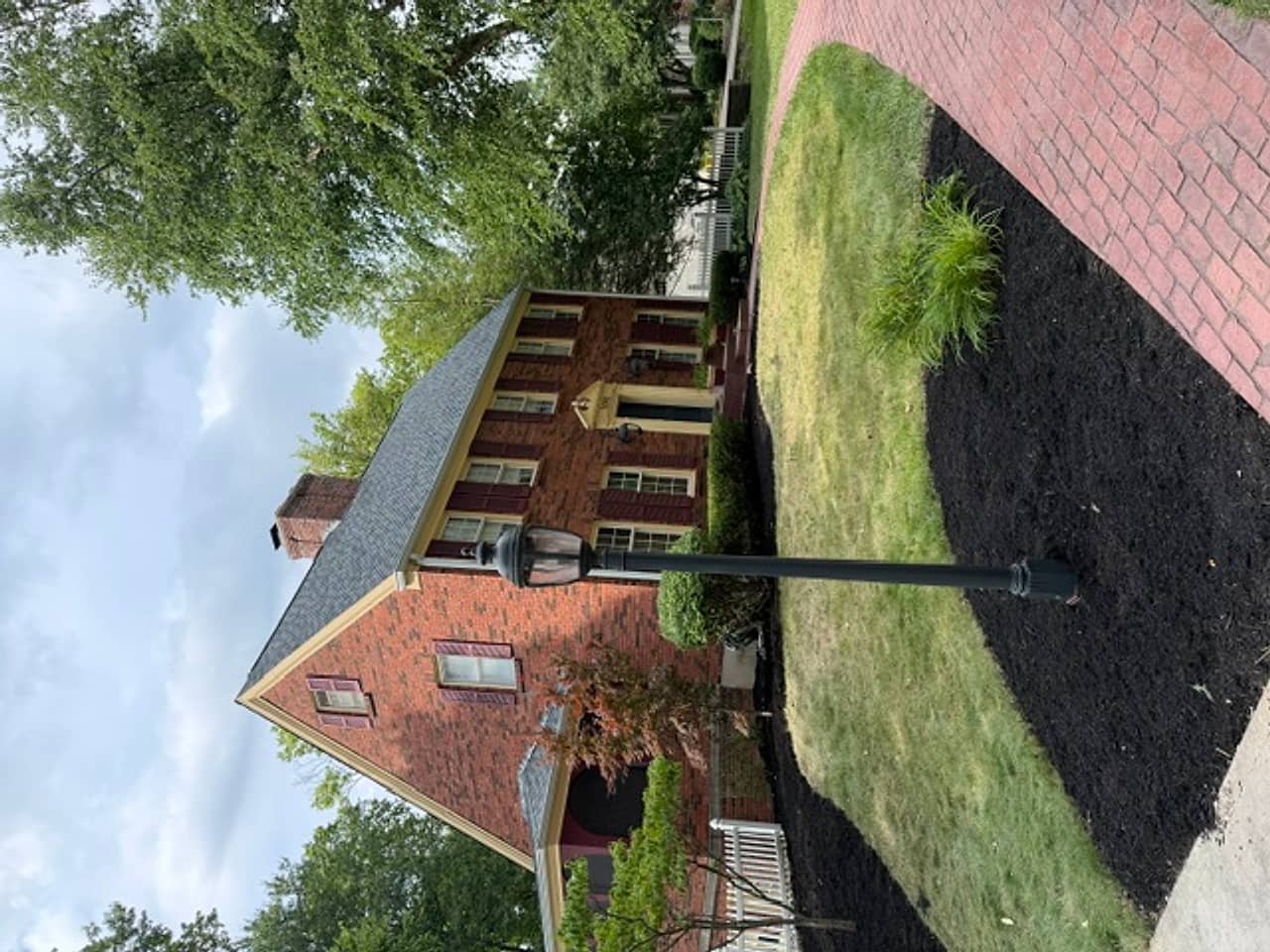
Fresh beds and mulch along a brick walkway
From first call to final walk-back.
Walk the property
We come out free, look at sun and shade, check where water runs and stands, note downspouts and grade, and find out what you actually want the space to do.
Plan and quote
You get bed shapes, plant types and counts, materials and any grading spelled out — plus one number for the whole scope and the order the work happens in.
Fix the ground first
Old beds, fabric and dead plants come out, grade gets corrected, runoff gets redirected and soil gets loosened. Everything that ends up buried gets handled now.
Edge, plant, mulch
Beds get cut and defined, plants set at correct depth and spacing, then mulch or stone goes down deep enough to hold moisture without smothering roots or piling on trunks.
Seed, clean and hand off
Disturbed ground gets topsoil and seed where the season allows, walks and drives get blown clean, debris leaves with us, and we walk you through the first season of watering.
What goes in the ground.
Hardwood bark mulch
The regional default. Breaks down into the soil and feeds it, and knits together well enough to stay put on a mild grade. Needs refreshing on a cycle.
Dyed mulches
Black, brown and red hold color longer and read sharper against a light-colored house. Cost more per yard and still need topping off as they weather.
River rock & decorative gravel
Doesn't break down or need annual refreshing, and holds on slopes and under downspouts where mulch floats away. Heavier to install and harder to change later.
Boulders, steppers & flagstone
Accent boulders and stone paths for beds that need structure — often matched to the wall or patio when we're doing the hardscape too.
Edging options
A trenched spade-cut edge is clean and costs the least but needs re-cutting. Steel, aluminum, paver and stone borders hold a line longer against mowers and mulch creep.
Plant categories
Evergreens for year-round structure and screening, deciduous shrubs and ornamental trees for seasonal interest, grasses and perennials for fill — matched to sun, shade and how wet the spot stays.
What drives landscaping cost
We don't quote landscaping over the phone, because two jobs that sound identical on a call can be very different on the ground. A bed refresh on flat, open ground and a full renovation on a slope with a drainage problem share almost nothing but the word landscaping. Here's what actually moves the number.
Bed area and square footage
Measured bed and turf area sets the volume of everything else — soil, mulch, stone, seed and labor all scale with it. A front walk border and a whole-property plan are different orders of work.
Tear-out before install
Whether existing beds come out first is one of the biggest swings. Stripping overgrowth, old fabric, buried stone and root balls is real labor that happens before a single new plant goes in.
Plant sizes and counts
Larger nursery stock costs more and takes more to move and set, but reads finished immediately. Smaller stock costs less and fills in over a few seasons. You pick where on that line the project sits.
Material volume
Mulch, topsoil, stone and seed are sold by volume and weight, and depth matters as much as area. Decorative stone and boulders cost more to buy and far more to move than bark mulch.
Grading and drainage
If water is the actual problem, fixing it is part of the job. Regrading a low spot, extending a downspout run or terracing an eroding slope adds machine time before the planting starts.
Site access
Whether a machine can reach the work changes everything. Fenced backyards, tight side yards and steep grades mean material moves by wheelbarrow, and that shows up as labor.
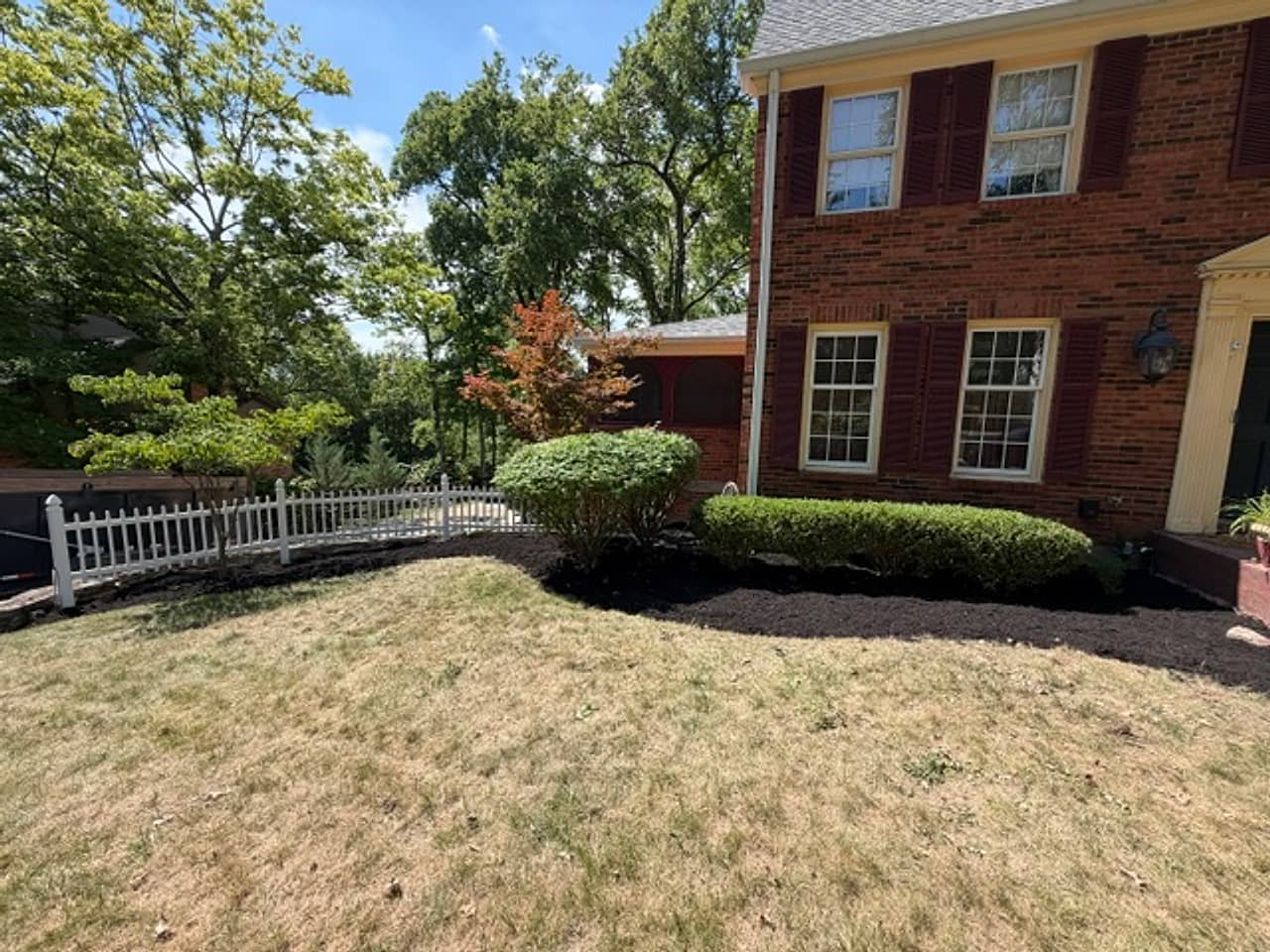
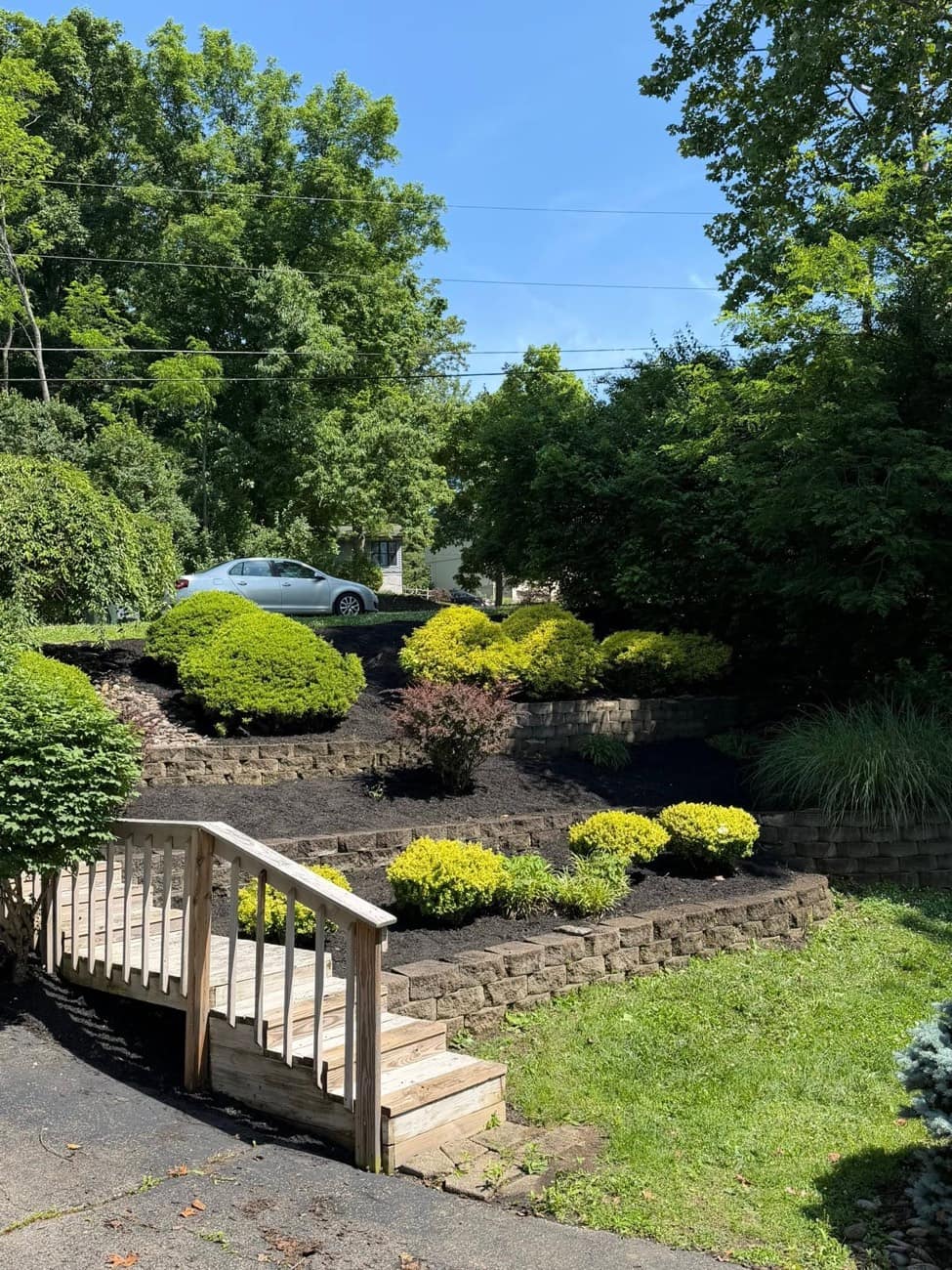
Foundation plantings cleaned up and re-mulched
One-time renovation or ongoing care
These are two different services, and people call about both. Plenty of properties need the first and then decide they want the second.
One-time landscape renovation
- A project with a start and an end — beds rebuilt, planted, mulched, edged and done
- Best when the landscape has gotten away from you, or the house just changed hands
- Where the tear-out, grading and drainage work happens
- Quoted as one number for the whole scope after a walk-through
- Pairs naturally with hardscape, a deck or a tree removal happening at the same time
Ongoing property care
- A schedule — cleanups, trimming, edging and mulch refresh through the season
- Best for keeping a finished landscape from sliding backward
- Common on rentals, HOAs and commercial lots that have to stay presentable
- Quoted on a recurring basis built around what the property actually needs
- The same crew that already knows the property, its trees and its hardscape
Lawn & Landscaping across Northern Kentucky.
Serving within 50 miles of Northern Kentucky.
Lawn & Landscaping questions.
Anything else — ask on the walk-through. You'll get the same straight answer either way.
How much does landscaping cost in Northern Kentucky?
It comes down to bed and turf square footage, plant sizes and counts, material volume, whether existing beds get torn out first, whether grading is involved, and how hard the work area is to reach with a machine. That's why we quote from a free walk-through instead of over the phone.
When is the best time to seed a lawn here?
Northern Kentucky lawns are cool-season turf, and late summer into fall is the strong window. Soil is still warm enough for quick germination, nights cool off, weed pressure drops, and new grass gets fall plus the following spring to root before summer heat. Spring seeding works but has less runway.
Do you do fertilizing or weed-control programs?
No. Chemical lawn applications are a separately licensed line of work and we don't hold ourselves out as doing them. What we do is the physical side — grading, topsoil, seeding, bed renovation, mulch and edging. If you want a treatment program on top of that, we'll say so rather than take the job.
Why does mulch keep washing out of my beds?
Usually one of three things: the bed sits on a grade with nothing holding the low side, a downspout or roof valley is dumping straight into it, or the mulch is piled so deep it can't knit together. The fix is the cause — an installed edge, a redirected downspout, or stone where water will always run.
How deep should mulch be, and should it touch the trunks?
A couple of inches does the job — enough to hold moisture and suppress weeds. Much deeper and it sheds water instead of taking it in, and roots start growing up into the mulch. It should never pile against trunks or stems. Mulch volcanoes hold moisture on the bark and invite rot and pests.
Why do plants die in my yard when the neighbor's do fine?
Often it's the soil and the water, not the plant. Clay holds moisture and drains slowly, so anything set too deep or in a narrow hole sits in a bowl. Exposure matters too — one side of a house can be full shade while the other bakes. We match selection to the actual conditions of each spot.
Can you fix a landscape that's been let go for years?
That's a normal starting point for us. Overgrowth, volunteer trees and failed fabric come out, beds get reshaped and redefined, and what's worth saving stays. Sometimes the honest answer is that a shrub planted three feet off the foundation should go rather than get pruned again — we'll tell you which is which on site.
I have a wet spot or a bare strip that keeps dying. Is that landscaping?
It's usually a grading or drainage problem showing up as a turf problem. Water collecting in a low area, sheeting off a hard surface or discharging from a downspout will kill grass in the same place every year no matter how much seed goes down. We grade and handle drainage, so we can fix the cause and then re-establish the turf.
Do you do weekly mowing, or only projects?
Mowing isn't what we lead with. Our focus is installation and property transformation — bed builds, planting, mulch, stone, grading and seeding — plus recurring maintenance like cleanups, trimming and mulch refresh. Commercial lots, HOAs and rentals are a growing part of that. Tell us what you need on the walk-through and we'll be straight about what we'll take on.
Tell us what the property needs.
Send it over or call — we'll come look, talk it through straight, and give you a number you can trust. No pressure, no runaround.
Call direct(859) 903-4098- 1
Call or send the form
Tell us what's going on with the property.
- 2
Free walk-through
We come look, talk it through straight, and give you a real number.
- 3
We do the work
Done right, cleaned up, and stood behind.