
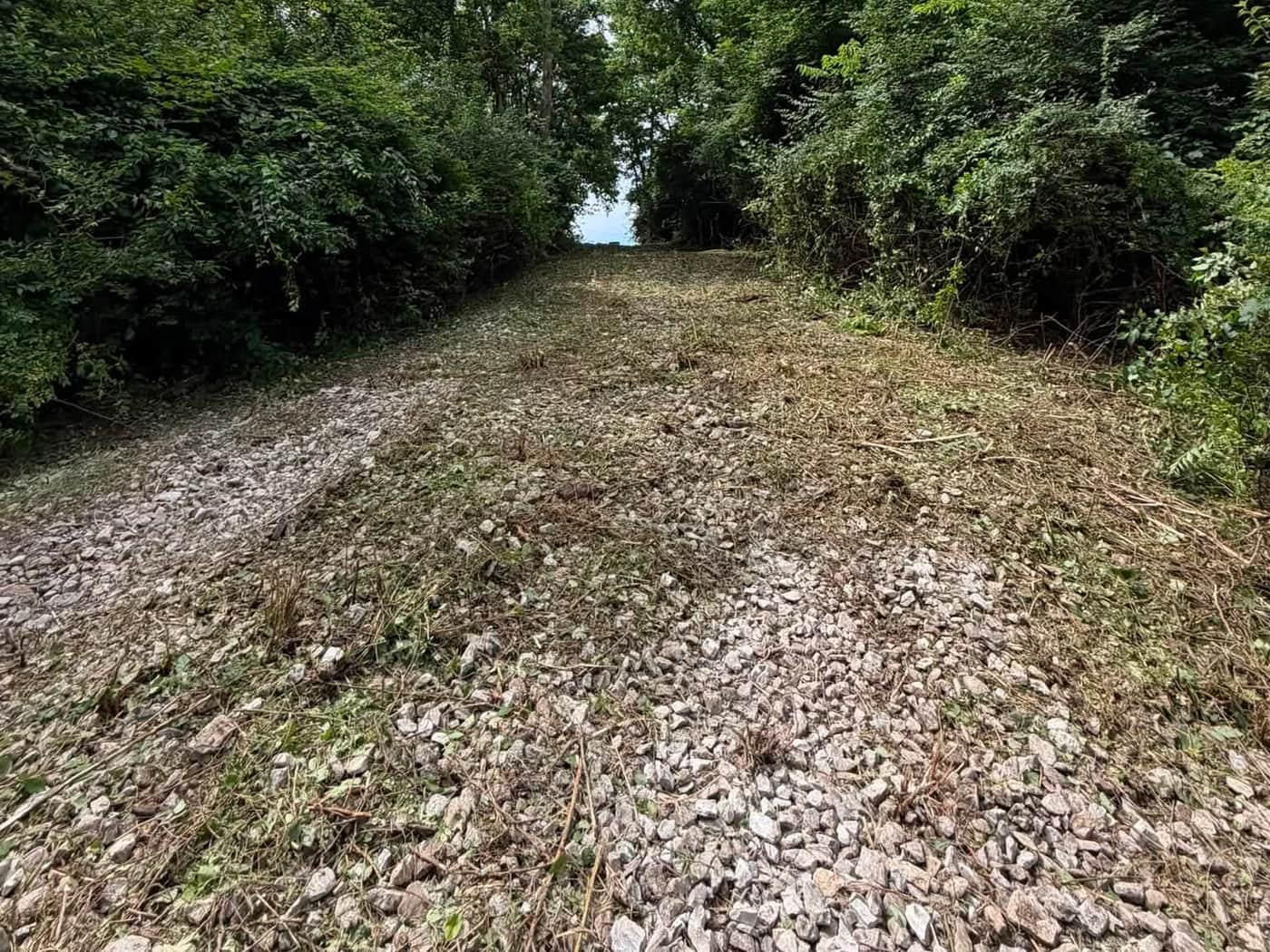
Forestry Mulching in Northern Kentucky
K&M grinds brush, undergrowth and small trees in place across Northern Kentucky — one machine turns overgrowth into a mulch layer on the spot. No burn piles, no haul-off, no scraped-bare dirt. Family-owned, licensed and insured, with free on-site estimates.
Mulching work we handle.
Overgrowth & brush
Honeysuckle, briars, wild rose, cedar and volunteer scrub ground down to a clean mulch layer you can walk across the same day.
Pasture & field reclaim
Encroaching edges and whole fields pushed back to open, grass-ready ground, so the usable acreage of the property goes back up.
Trails & access lanes
Walking paths, hunting lanes and equipment routes cut through wooded ground at whatever width you need, without tearing up the trail bed.
Fence rows & property lines
Overgrown lines opened back up for new fence, survey work, or simply knowing where your boundary actually runs.
Under-canopy cleanup
Understory brush taken out while the mature trees you want stay standing — the selective work a dozer can't do.
Done the way this ground demands.
Forestry mulching is the cleanest way to take ground back from overgrowth. Instead of cutting, piling and burning — or paying to haul brush away — a mulching head grinds everything standing into chips right where it grew. One machine does the cutting, the processing and the cleanup in a single pass.
What makes it worth doing here is the mulch mat left behind. Northern Kentucky ground is clay-heavy and most of it sits on a grade. Strip it bare and the first hard rain moves your topsoil to the bottom of the hill. A layer of chips holds that soil in place, slows runoff, keeps moisture in the ground through August, and works into the soil over the following seasons.
The overgrowth we see most is bush honeysuckle. It leafs out before anything native does and holds its leaves late, shading out everything underneath until a woodlot is a wall of green at eye level with bare floor beneath it. Add briars, wild rose, cedar and the volunteer locust that colonizes any pasture edge nobody mowed, and you get back acreage that hasn't been walked in ten years.
We use mulching for pasture reclaim, trails and hunting lanes, equipment access, fence rows gone feral and sight lines on properties around Florence, Union, Burlington, Walton and out into Greater Cincinnati. It isn't the right tool for every job — heavy timber and build-ready pads are different work — and we'll say so on the walk-through instead of selling you the machine we brought.
Mulching is the right call when
- You want overgrowth gone without burn piles or hauling
- The ground should stay intact — no bare-dirt scraping
- Brush and scrub are the problem, not big timber
- You're reclaiming pasture, lanes or lines on acreage
- There are trees on the property you want kept
- Erosion or slope makes stripping the ground a bad idea
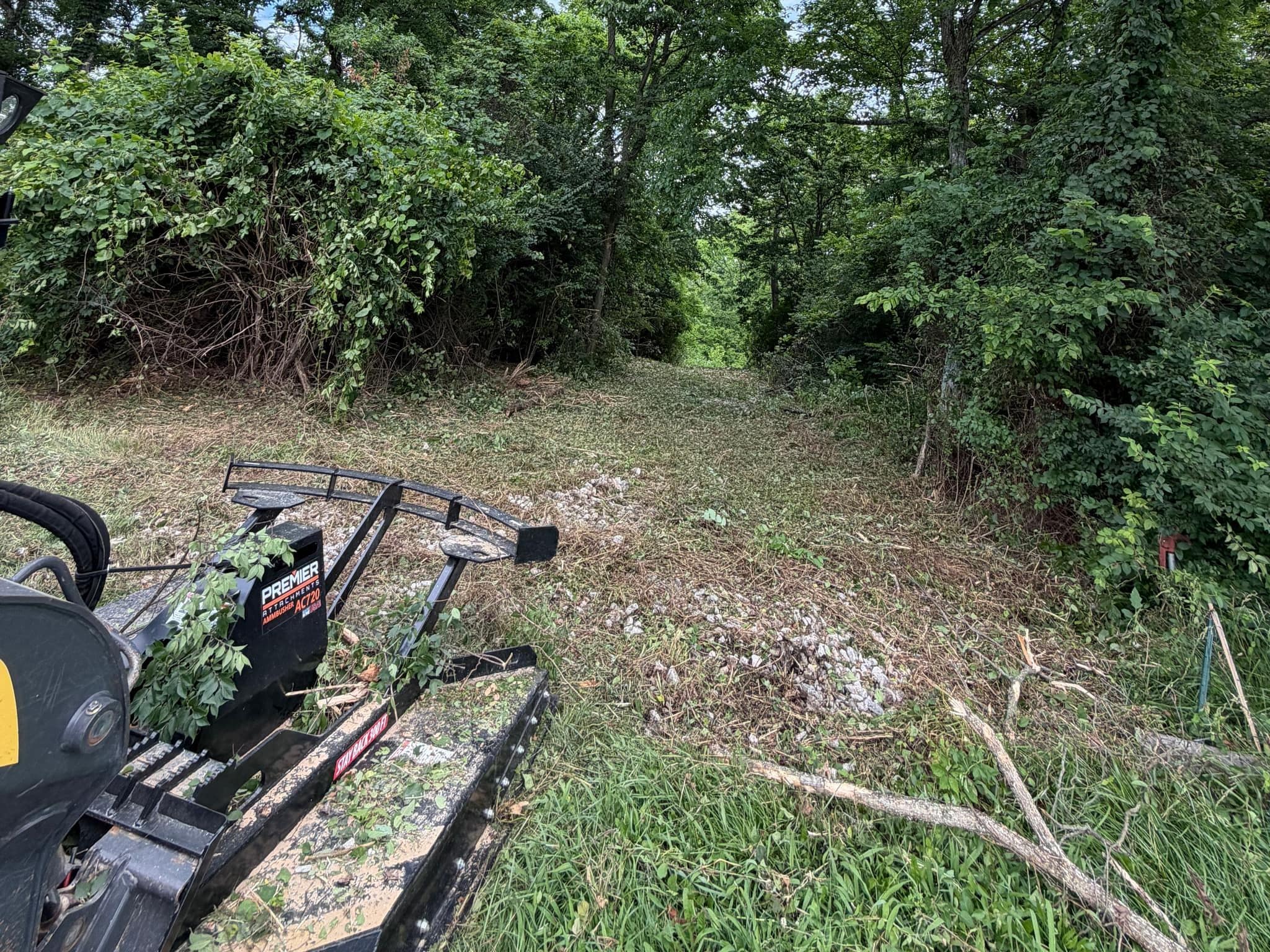
A lane cut and cleared through heavy growth
From first call to final walk-back.
Free walk-through
We walk the ground with you, agree on boundaries and mark what stays. Sight lines, wet spots, buried lines and anything metal in the brush get noted before a machine turns a wheel.
Plan the finish
Trail, pasture, park-like, or just knocked back — the intended use sets how fine the mulch gets ground and how many passes it takes. That's agreed up front, not at the end.
Big stems first
Anything past comfortable mulching size gets dropped and handled as tree work, or left standing if you want it. Sorting that out first keeps the mulching pass clean and the schedule honest.
The mulching pass
The head grinds standing brush and small stems from the top down, worked in a pattern that spreads chips evenly instead of windrowing them into piles you'd have to deal with later.
Finish and walk it
Where you want a smoother result, a second pass takes chip size down and levels the mat. Then we go back over the ground with you and talk through seeding, grading or fencing if that's next.
How it gets done.
Tracked carriers
Weight spread over tracks is what lets a heavy machine work soft or sloped ground without rutting it — the usual answer for wet Northern Kentucky clay and hillside work.
Mulching head style
Drum-style heads chew steadily through mixed brush and leave a finer mat; disc-style heads take bigger stems faster but leave a rougher finish. The ground and the end use decide which is right.
Saw work alongside
Bigger trees come down with a saw before or after the machine passes. Pairing the two is how mixed ground gets cleared without paying machine time to fight stems it wasn't built for.
The mulch mat itself
The chips are the product, not waste. Depth follows how much material was standing there — heavy brush leaves a thick mat, scattered growth a thin one that disappears into the grass in a season or two.
What drives the cost of forestry mulching
There's no honest per-acre price for mulching, and anyone quoting one over the phone is guessing. The work bills by machine time, and how many hours your ground takes depends on what's growing on it and how hard it is to reach. Here's what we're looking at on the walk-through — then you get a real number, free and with no obligation.
Acreage and shape
Total ground matters, but so does its shape. Open acreage lets a machine run long, efficient passes; narrow strips, tight corners and scattered pockets mean more turning per acre covered.
Stem density
The biggest single variable. Scattered brush over open pasture and a honeysuckle thicket you can't see ten feet into are the same acre on paper and very different days of work.
Stem diameter
Grinding time climbs fast with size. Finger-thick saplings feed through steadily; mature stems take real time each, and past a certain diameter felling is simply the cheaper way.
Terrain and slope
Flat, dry ground is fastest. Side slopes, ravines, washouts and rock slow production, because the machine has to be worked carefully rather than just driven at the brush.
Access to the work
How equipment gets on and off the property, whether it has to cross ground you want protected, and how far the work sits from where it can unload all add time before any grinding starts.
How clean a finish you want
A rough knock-back is one pass. Pasture-smooth or park-like under kept trees means going back over the same ground, and that time is the difference between two very different quotes.
What's hiding in the brush
Old fence wire, posts, dumped tin, concrete and rock are hard on a mulching head. Where a site is known to have them, the work slows down — which we'd rather price honestly than discover mid-job.
Forestry mulching vs. traditional clearing
Both get the brush off your property, and they leave very different ground behind. The right answer depends entirely on what happens next. We do both, so we've got no reason to steer you.
Forestry mulching
- Material is ground in place — nothing to burn, pile or haul off
- Topsoil and root structure stay put, which matters on slopes and erodible clay
- Leaves a mulch mat that holds moisture and slows runoff
- Selective — mature trees you want kept can stay standing
- Roots and stumps stay in the ground, so persistent species push back up
- Not the tool for heavy timber or for making ground build-ready
Traditional clearing (dozer or excavator)
- Vegetation comes out root and all, so regrowth from those stems is finished
- Leaves bare, workable ground when you need a pad, drive or foundation
- Handles big timber, stumps and rock that mulching can't
- Grading can happen in the same operation, shaping how water moves
- Creates burn piles or haul-off — more cost and more days on site
- Disturbs soil and strips topsoil, which invites erosion until it's stabilized
Forestry Mulching across Northern Kentucky.
Serving within 50 miles of Northern Kentucky.
Forestry Mulching questions.
Anything else — ask on the walk-through. You'll get the same straight answer either way.
How much does forestry mulching cost?
It's priced off machine time, so it comes down to acreage, how thick and how large the growth is, slope, access, and how clean a finish you want. Thin brush over open ground goes quickly; a honeysuckle thicket on a hillside doesn't. We walk it with you for free and quote what we actually see.
What size trees can be mulched?
Mulching shines on brush, scrub and smaller stems. Past a certain diameter, grinding a tree takes longer than felling it, so bigger timber is better handled as tree work. We do both, so the plan fits the ground — not the one machine we happen to bring.
Is mulching better than bulldozing?
For reclaim work, usually yes — a dozer strips ground bare and leaves push piles, while mulching keeps soil structure intact under a protective mat. If the ground is being built on, that flips: you need bare, graded, stump-free dirt, and that's a dozer or excavator job.
What's left when you're done?
A walkable layer of wood chips where the overgrowth stood. No burn piles, nothing to haul, no debris waiting on you after we go. The mat weathers down and works into the soil over the following seasons, feeding the ground instead of sitting on it.
Will the brush grow back?
Some of it will. Mulching takes everything above ground but leaves the root systems, and honeysuckle, briars and locust all resprout from roots and stumps. The mulch mat slows it down, and a follow-up mowing or spot treatment usually keeps reclaimed ground open for good.
When is the best time of year for mulching?
Dormant season is often ideal — leaves are down, you can see what you're working with, and frozen or dry ground carries equipment without rutting. We mulch year-round, though. What we watch isn't the calendar but the ground: saturated clay after a wet stretch is worth waiting out.
Can you mulch on a slope or near a creek?
Often yes, and that's where mulching earns its keep — leaving roots and topsoil in place is exactly what erodible slopes and stream banks need. Steepness, wet ground and safety set the limits, and if a spot is beyond what can be worked safely we'll say so on the walk-through.
Do I need a permit for forestry mulching?
Straightforward brush and overgrowth work on your own property often doesn't need one, but requirements vary by county, by zoning, and by what's near the work — floodplain, stream buffers, easements. If there's any question, we check with the county before we start rather than after.
Can I build or plant on mulched ground?
You can seed pasture or grass once the mat is thin enough for seed to reach soil. Building is different — stumps and roots are still in the ground, so a construction pad needs clearing and grading after the mulching, not instead of it.
Do you mulch small properties or only acreage?
Both. A quarter-acre of brush behind a house in a Boone County subdivision and thirty grown-over acres out in the county are the same service at different scales. Smaller jobs often pair well with tree work or fence-line clearing on the same visit, and we'll point that out if it saves you money.

Tell us what the property needs.
Send it over or call — we'll come look, talk it through straight, and give you a number you can trust. No pressure, no runaround.
Call direct(859) 903-4098- 1
Call or send the form
Tell us what's going on with the property.
- 2
Free walk-through
We come look, talk it through straight, and give you a real number.
- 3
We do the work
Done right, cleaned up, and stood behind.