
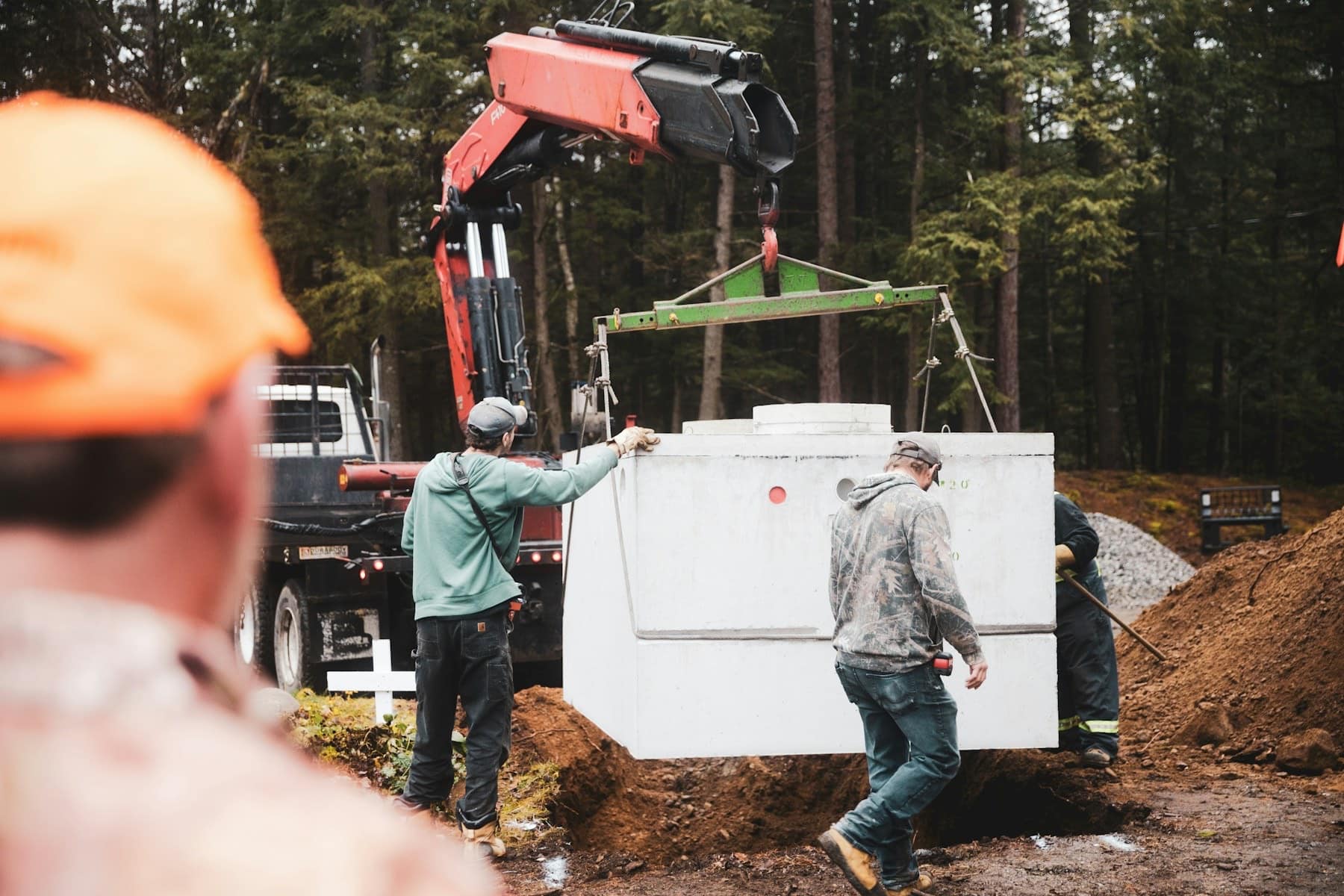
Septic Services in Northern Kentucky
K&M handles septic install and repair work across Northern Kentucky and Greater Cincinnati, backed by the same excavation and grading capability we bring to land clearing and site work. Septic is regulated work — the county health department sets the requirements, and the specifics get confirmed for your property. Free on-site estimates.
Septic work we handle.
Repair work
Failing lines, damaged tanks, crushed or root-blocked pipe, and the excavation it takes to reach any of it. We dig, fix it, and put the ground back.
Installation work
New system installation built to what has been approved for the property, then backfilled and graded clean once the tank and lines are set.
Excavation & backfill
The dig itself — depth, trench work, and careful backfill so nothing settles into a low spot a season or two later.
Grading & restoration
Final grade, topsoil and seed, so the yard drains away from the house instead of holding ruts where the machine sat.
Free on-site look
We come out, listen to what the system has been doing, and give you a straight read before you spend anything.
Done the way this ground demands.
Plenty of Northern Kentucky properties run on septic instead of sewer — acreage past the subdivisions in Boone County, older places around Walton and Union, and a lot of the ground between here and Greater Cincinnati. The system buried in your yard is the whole wastewater plant for the house, and it only asks for attention once something has gone wrong.
A conventional system is simpler than people expect. Waste leaves the house into a buried tank, where solids settle and grease floats. The liquid in the middle flows out to a drain field — perforated lines set in gravel or chambers — and soaks into the soil, which does the final cleaning. Everything depends on that soil staying able to accept water.
Septic work is excavation work at its core: digging to depth without collapsing a trench, backfilling without crushing what was just set, then bringing the yard back to a grade that sheds water. That's what we do every week on clearing and site jobs. It's also regulated work — the county health department sets what can be installed and where, so nothing gets promised before the requirements for your property are confirmed.
Call us when
- Drains are slow throughout the house, not just at one fixture
- Toilets gurgle, or backups happen after heavy use or heavy rain
- There's a soggy or unusually green patch of grass over the drain field
- You smell sewage in the yard or near the tank lid
- Roots, a collapsed line or equipment traffic has damaged part of the system
- You're buying or building on a septic property and want eyes on the ground
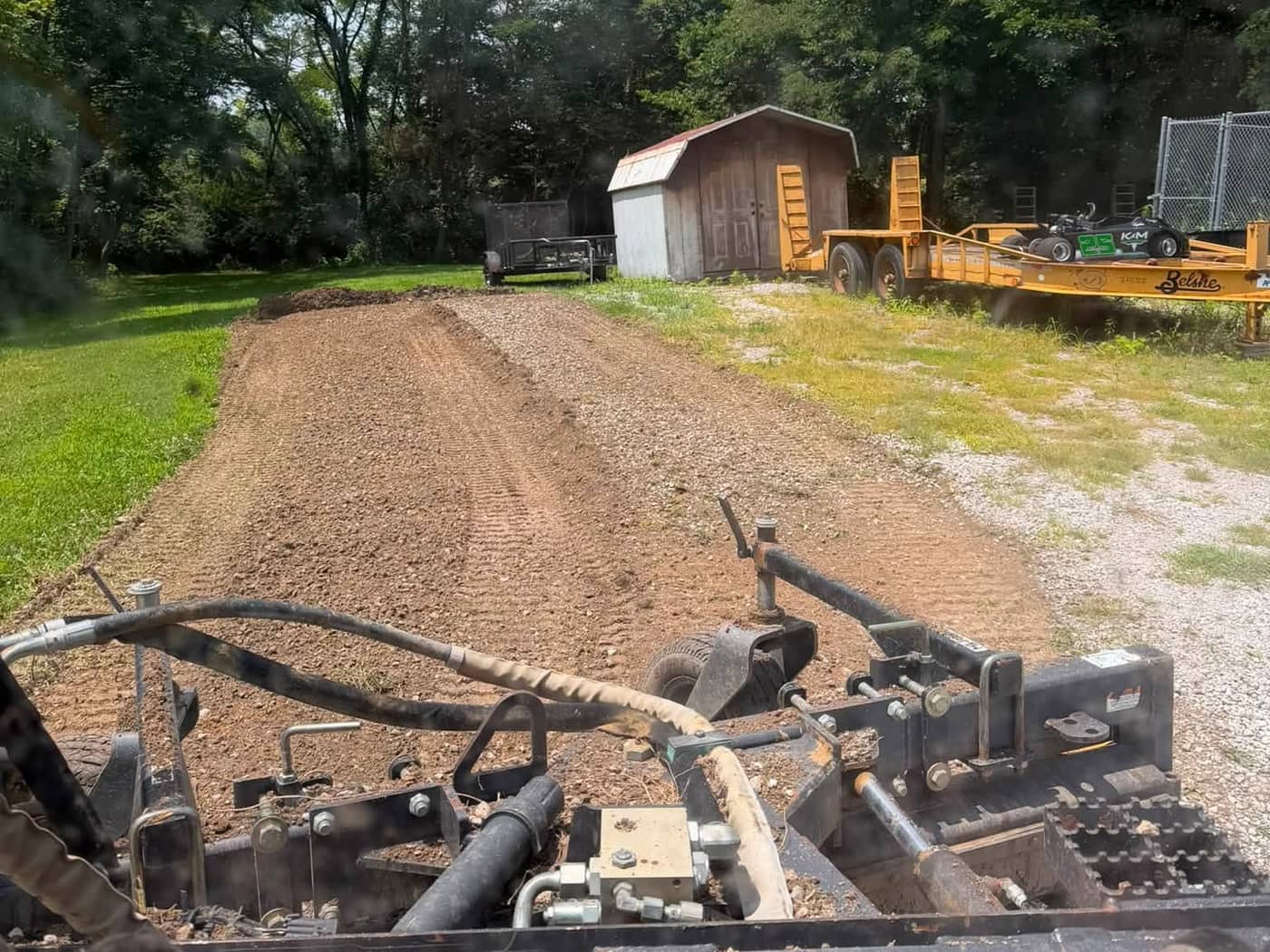
The same excavation and grading equipment we bring to site work
From first call to final walk-back.
Free walk-through
We come out, look at the yard, the tank area and the field, and listen to what the house has been doing. No charge, no obligation, no pressure to decide on the spot.
Confirming what's required
Septic is permitted through the county health department, and their requirements drive what's allowed and where. Those specifics get confirmed for your property before dirt moves.
Planning access
We work out how equipment gets in and out so the field, the drive and the lawn take as little traffic as possible. Compacted soil over a drain field is a problem you don't want to create.
The dig and the work
Excavation to depth, the repair or installation itself, then careful backfill — trenches closed so they won't settle into a trough two seasons from now.
Grade, restore, hand it back
Final grading, topsoil and seed, full cleanup, and a plain rundown of what to watch for and what to keep off the field from here on.
System types.
Conventional gravity system
The common setup: a buried tank where solids settle, and a gravel or chamber drain field below it where the liquid soaks into soil. Works when soil and fall cooperate.
Pump or lift systems
When the field sits uphill of the tank, or there isn't enough fall for gravity, a pump moves the effluent instead. More parts, and something that needs power.
Alternative systems
Tight soil, a high water table or a small lot can call for something beyond a standard field. Which type a property needs is determined through the health department's process, not picked off a menu.
What drives the cost of septic work
There's no honest way to price septic work over the phone. Two houses on the same road can need very different systems depending on soil, slope and how much room the lot has. Here's what actually moves the number.
System type and size
A straightforward gravity system and one needing a pump or an alternative design are different projects. Size generally follows the house — more bedrooms, more capacity, more field.
Soil and site conditions
Soil type, how fast it accepts water, slope and the depth of the water table all shape what a property can support. Tight clay and wet ground make everything harder.
Depth and volume of excavation
How deep the tank and lines sit, how much dirt actually moves, and whether rock turns up. Excavation is the bulk of the labor on most septic jobs.
Access for equipment
An open lot is easy to work. A backyard reached through one narrow gate, past a pool or between mature trees costs more in time and hand work.
Removing an old system
If a failed tank or spent field has to come out, that's demolition, haul-off and a bigger hole before any of the new work starts.
Restoration afterward
Grading, topsoil, seed and repairing whatever lawn or drive the machines had to cross. Some properties need almost none of it; others need real work to look right again.
Permitting and approval steps
Septic runs through the county health department, and their process, timing and fees are part of the total. Those are set by the county, not by us.
Septic across Northern Kentucky.
Serving within 50 miles of Northern Kentucky.
Septic questions.
Anything else — ask on the walk-through. You'll get the same straight answer either way.
Do I need county approval for septic work?
Septic systems in Kentucky are regulated through the county health department, and requirements vary by county. They set what's allowed, where it can go, and how the work gets approved — we don't. On the walk-through we'll tell you plainly what your project involves before any dirt moves.
How do I know if my septic system is failing?
The classic signs: drains slow throughout the house instead of at one fixture, gurgling, sewage odor inside or out, backups after heavy use or heavy rain, and soggy or unusually green grass over the drain field. Any one is worth a look — caught early, a repair often stays a repair.
How often should a septic tank be pumped?
General guidance is every few years for a typical household, sooner for a small tank or a full house. Pumping is done by a licensed pumping service, not by us. It's the cheapest maintenance there is — a tank that never gets pumped pushes solids into the drain field, and that's the expensive failure.
Why shouldn't I drive or park on the drain field?
Weight compacts soil, and compacted soil can't accept water. Vehicles, trailers, equipment, even a regularly parked mower can crush shallow lines or press the ground tight enough that the field stops draining. Keeping traffic and structures off it is the easiest thing you can do to make a system last.
What shortens the life of a septic system?
Grease down the drain. Wipes and anything else that doesn't break down. Harsh chemicals that kill the bacteria doing the work in the tank. Roots finding the lines. And too much water at once — a running toilet, or four loads of laundry back to back. Spreading water use across the week helps.
Do you pump tanks or perform soil evaluations?
No. Pumping is handled by licensed pumping services, and soil and site evaluations are their own regulated step in the county's process. What we bring is the install and repair side — the excavation, the backfill and the grading septic work is built on. If you need the other pieces, we'll say so.
Can you fix the yard after septic work?
Yes. Grading, topsoil, seed and cleanup are part of how we finish, same as on our clearing and site jobs. Septic work moves a lot of dirt and runs equipment across a lawn — you shouldn't trade a septic problem for a mud problem.
How long does a septic system last?
A well-built system that gets pumped on schedule, stays clear of roots and never gets driven on can run a long time, and the tank usually outlives the drain field. Fields fail from overload, compaction, solids carrying over from a neglected tank, and age — which is why the small habits matter.
I'm buying a property on septic — what should I check?
Ask when the tank was last pumped, how many bedrooms the system was sized for, and whether records exist with the county health department. Then walk the yard: soggy ground, odor, or a field that's been paved, parked on or built over. We're glad to look before you close.
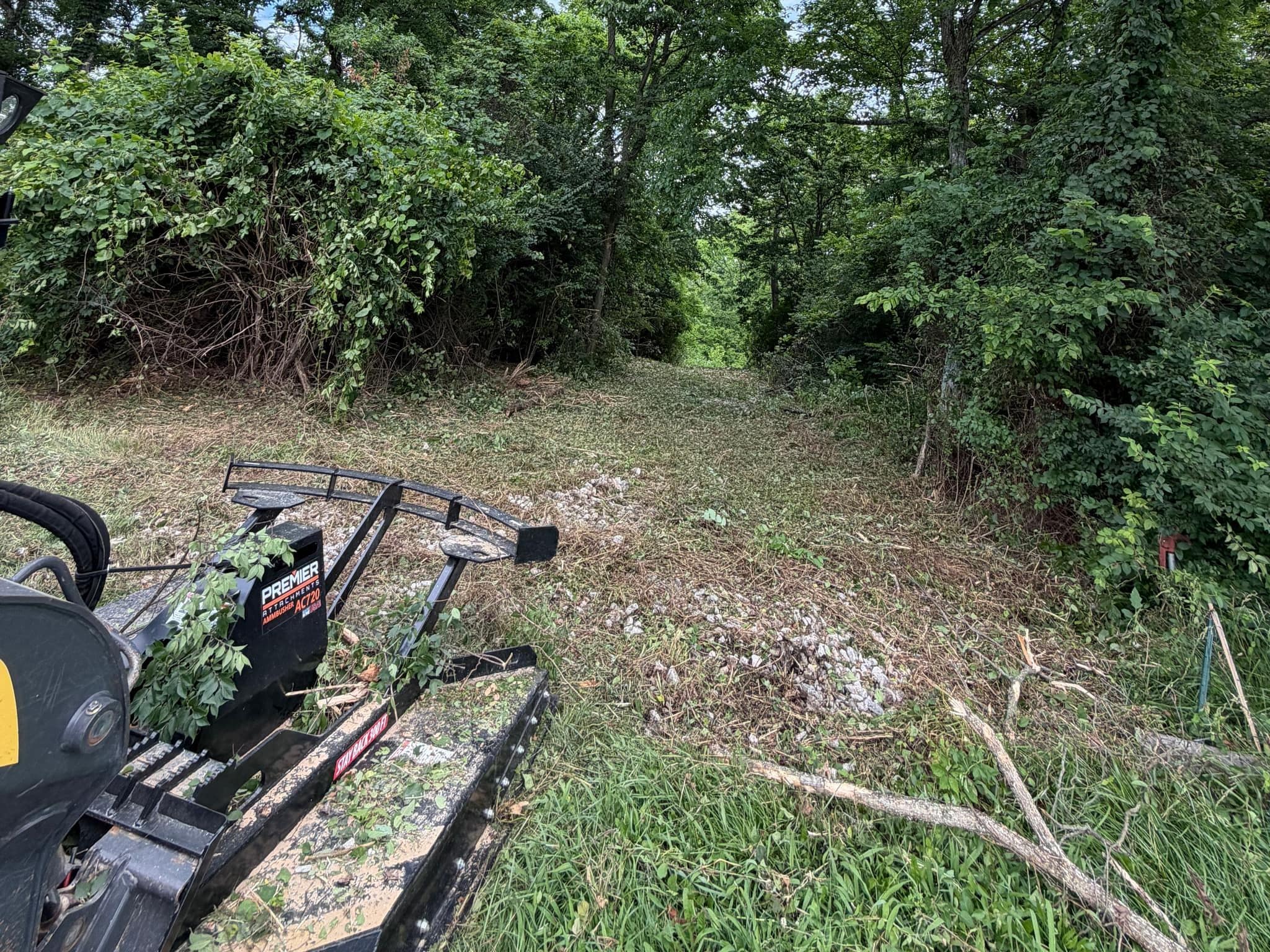


Tell us what the property needs.
Send it over or call — we'll come look, talk it through straight, and give you a number you can trust. No pressure, no runaround.
Call direct(859) 903-4098- 1
Call or send the form
Tell us what's going on with the property.
- 2
Free walk-through
We come look, talk it through straight, and give you a real number.
- 3
We do the work
Done right, cleaned up, and stood behind.