
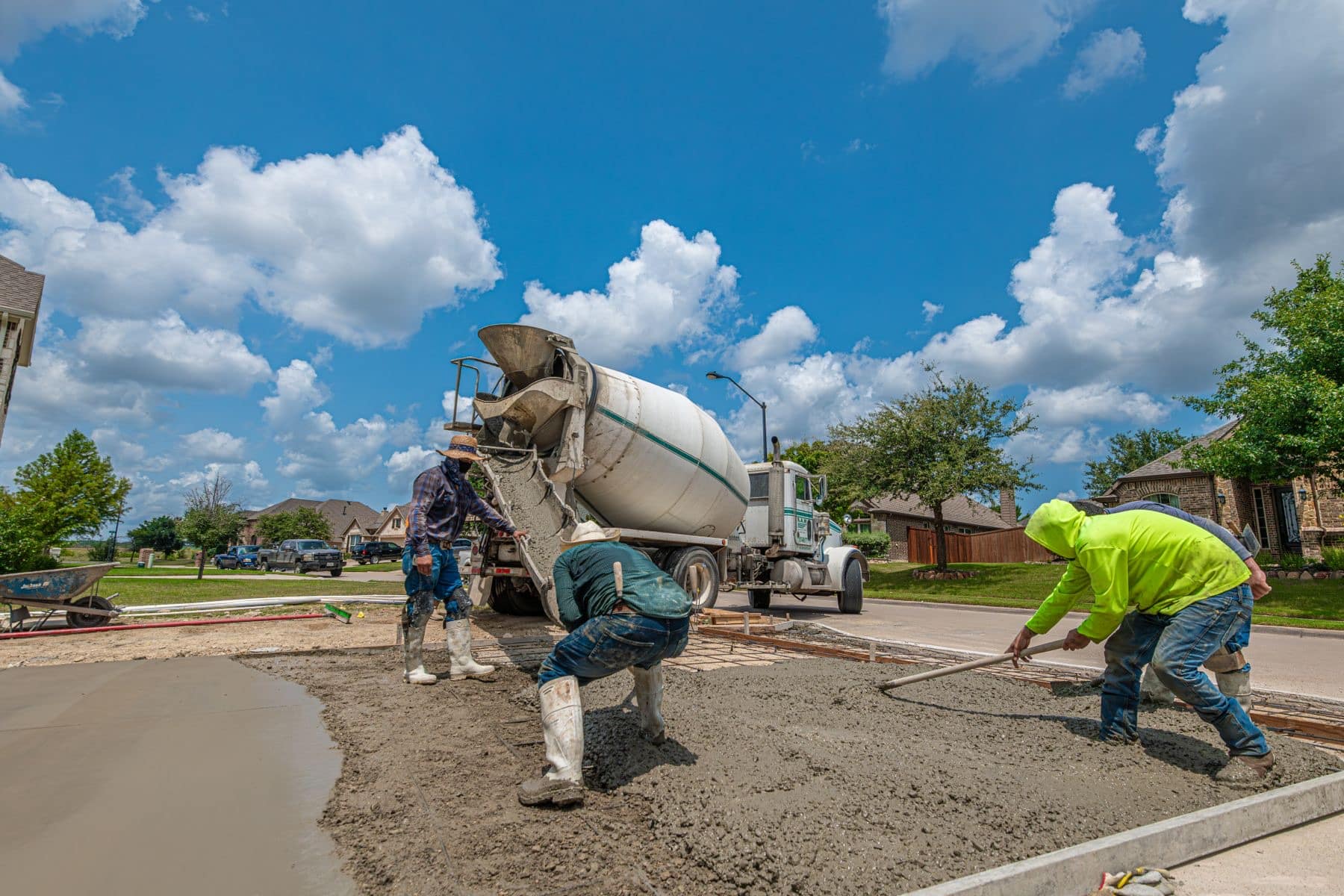
Concrete & Driveways in Northern Kentucky
K&M pours and replaces concrete driveways, walks, steps, aprons and pads across Boone County and Greater Cincinnati. The base under the slab gets the same attention as the finish on top, because that's what decides whether it survives Northern Kentucky clay and freeze-thaw. Free on-site estimates, licensed and insured.
Concrete work we handle.
Driveways
New drives and full replacements — excavated, base-prepped and compacted for the ground they sit on, then poured level and jointed so cracking goes where we put it.
Flatwork & walks
Sidewalks, entry walks and service paths poured flat, pitched away from the house, and broom-finished so they don't turn slick in rain and ice.
Steps & aprons
Steps into grade, plus the apron where the drive meets the road or garage — the spots that take the most abuse and fail first when they're poured thin.
Pads
Garage, shed, equipment and patio pads sized and reinforced for what's going on top, on a base built for the load rather than whatever the yard happened to be.
Tear-out & replace
Broken concrete out and hauled off, the ground underneath re-prepped rather than reused, and the new pour set on a base that isn't carrying the old slab's problems.
Done the way this ground demands.
Concrete looks like the simplest thing on a property and it's the least forgiving. A wall can be re-pointed and a deck board swapped, but once a slab is down it's down — and whatever went wrong underneath stays wrong for as long as the concrete is there.
The ground here works against flatwork. Boone County sits on clay that swells when it's wet and shrinks when it dries, so the surface under a slab is never truly still. Add freeze-thaw, water with nowhere to go, and de-icing salt working into the top, and you get the drives you see around Florence, Union and Burlington: cracked into puzzle pieces, one panel sitting above the next, the surface flaking off. Almost none of that is the concrete's fault — it's the base, the drainage, or both.
So a driveway done right is mostly excavation and stone. Dig out the soft ground, bring in clean base stone, compact it in lifts until it stops moving under weight. Set the pitch so water leaves instead of standing. Reinforce for the load, and cut control joints so the inevitable shrinkage cracking lands on your line instead of a random one. Because demolition and grading are already our own work, a replacement is one crew start to finish — and if your slab doesn't need replacing, we'll tell you that instead of selling you a pour.
Call us when
- The driveway is cracked, heaved or spalling past the point of patching
- One slab has settled or lifted and the panels no longer meet flat
- Water stands on the drive, or runs toward the garage instead of away from it
- You need a pad for a garage, shed, hot tub or equipment
- A gravel drive is ready to become a real one
- Concrete needs to come out before something better goes in
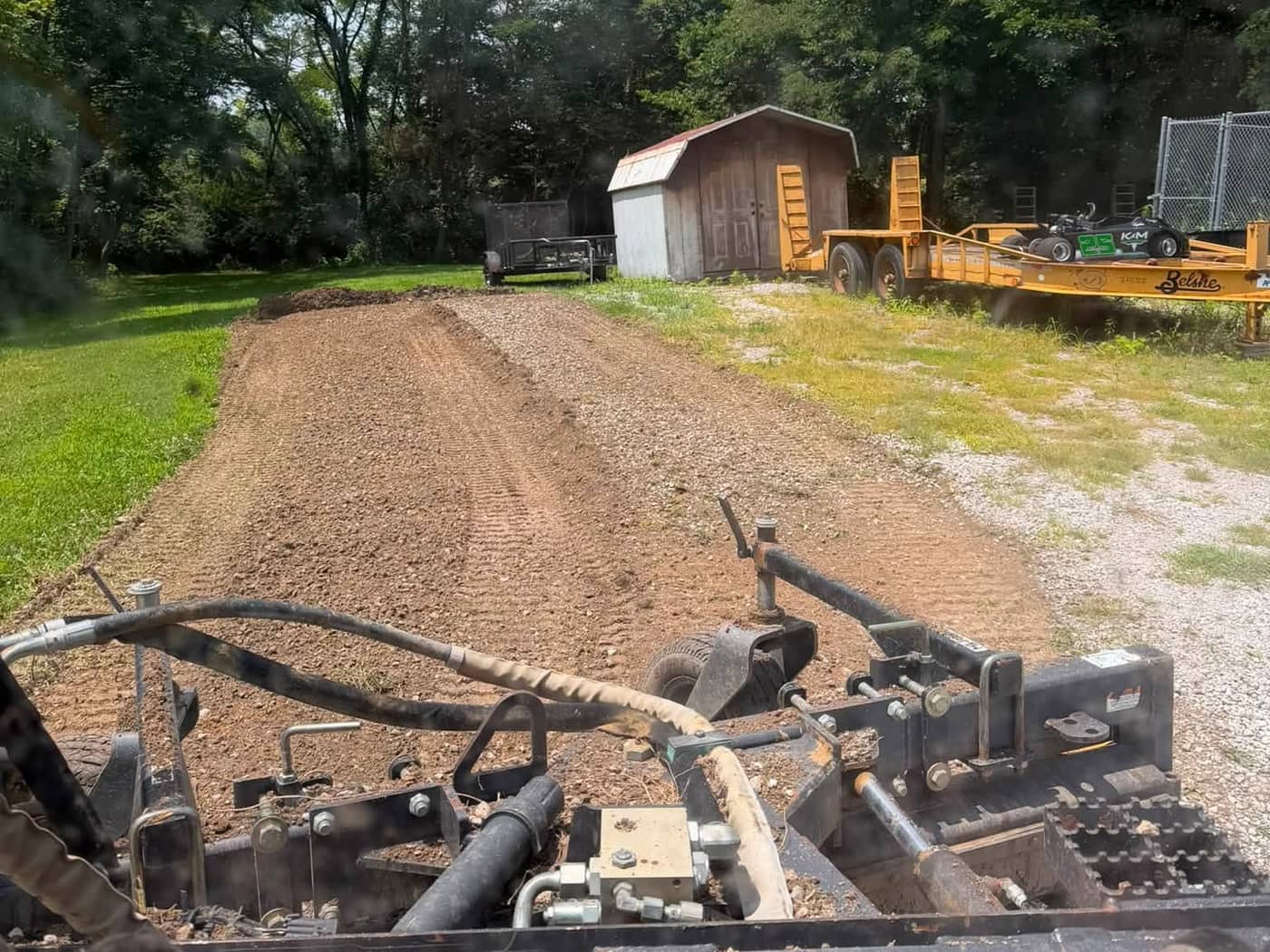
Base graded and compacted before anything goes down
From first call to final walk-back.
Free walk-through
We measure and look at what's actually failing — the cracking pattern, the drainage, the grade, the access for trucks. You get a straight read and a real number, no obligation.
Tear-out & excavation
Old concrete comes out and gets hauled off, and we dig to depth instead of pouring over whatever's there. Soft or saturated ground gets removed, not buried under the new slab.
Base & compaction
Clean stone in, compacted in lifts until it stops moving. This step decides how long the slab lasts, and it's the first one skipped on a cheap bid.
Forms, grade & reinforcement
Forms set to a pitch that sheds water away from the house and garage, with reinforcement sized to the use. Drainage gets solved here — after the pour, the options get expensive.
Pour, finish & cure
Placed, screeded, floated, finished and jointed, then cleaned up and graded at the edges. You get the cure schedule and when vehicles can come back before we pour, not after.
Finishes & options.
Base stone
Compacted crushed stone under the slab spreads the load and gives water somewhere to go. Depth depends on the soil and the use — soft clay needs more than firm ground does.
Reinforcement & control joints
Mesh or rebar doesn't stop cracking; it holds the slab together so cracks stay tight and the pieces stay level. Joints give shrinkage a planned line to follow instead of a random one.
Broom finish
The standard driveway and walkway texture in this climate, and for good reason — a slick trowel finish gets dangerous in rain and ice. Want something different? Ask on the walk-through.
Gravel vs. concrete drive
Gravel costs less and can be regraded and re-topped, but it moves and washes in heavy rain. Concrete costs more once, then mostly stops asking for anything.
What drives the cost of a concrete driveway
Nobody can quote concrete honestly over the phone. Two drives the same square footage can land far apart depending on what's under them and what has to come out first. Here's what actually moves the number, so you can read any bid — ours or anyone else's — and know what you're comparing.
Square footage
Concrete is priced by volume, so length, width and thickness all feed the same number. A wider turnaround or a longer approach means proportionally more material and more finishing time.
Thickness & reinforcement
A walk carrying feet and a drive parking a loaded truck are not the same slab. Thicker pours and heavier reinforcement cost more up front and are cheap insurance when the use calls for them.
Base condition & excavation
If the ground is soft, wet or full of fill, more comes out and more stone goes back in. Undercutting bad ground is the biggest swing between a low bid and a real one.
Tear-out of existing concrete
Breaking out an old slab, loading it and hauling it off is real labor and real disposal weight. Reinforced concrete takes longer to break, and a thick drive costs more to remove than a thin walk.
Access for trucks
A ready-mix truck that can back straight to the forms is cheap. One that has to be wheeled in across a yard, around a tight turn or up a slope adds hours to the same volume.
Site grade & drainage
Hillside lots often need grading, a swale or a drain line so water leaves instead of sitting against the slab edge. On some properties that isn't optional — it's what keeps the slab from failing early.
Finish & detail work
Steps, curves, thickened edges, aprons and tie-ins to existing concrete take more forming and hand work than a plain rectangle. More edges and transitions means more labor.
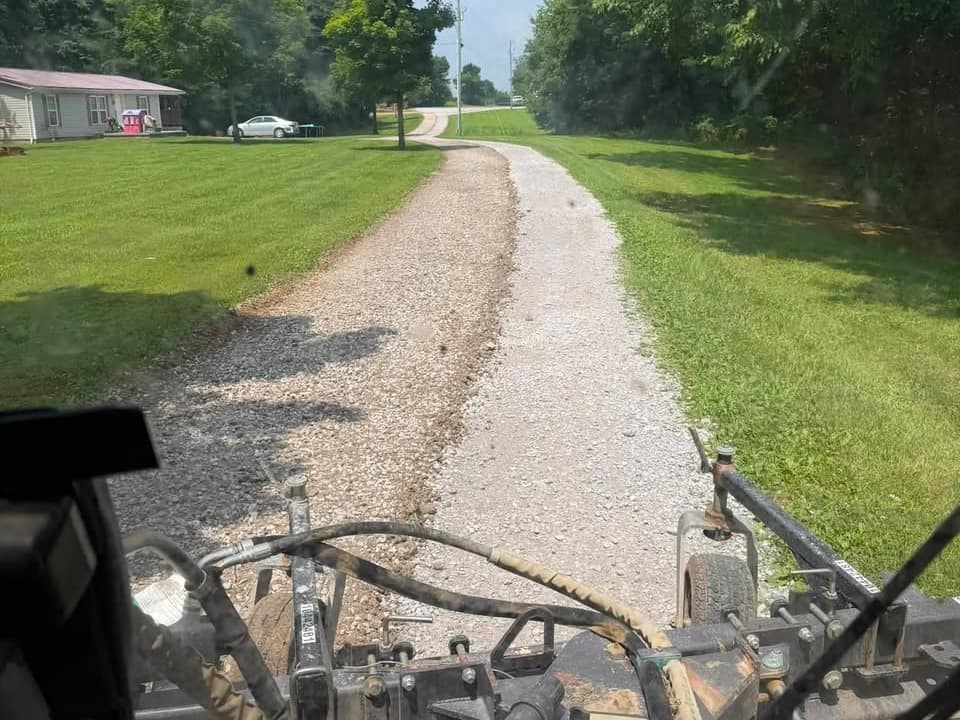
A drive rebuilt, rolled and shaped to shed water
Repair or replace?
Most driveway calls start here, and the honest answer depends on whether the concrete failed or the ground under it did. Surface problems can often be lived with. Movement problems can't be patched into submission.
Repair may be enough
- Surface spalling or flaking on a slab that's still flat and solid underneath
- Hairline cracks at or near control joints, with no height difference across them
- One localized section damaged while the rest of the drive is sound
- Joints and edges that just need sealing before another winter of salt
Replacement is the honest answer
- Panels heaved or settled so the edges no longer meet flat
- Wide, branching cracks running across the slab instead of following joints
- Sections that rock or move when a vehicle drives over them
- A drive patched repeatedly that keeps opening back up in the same places
Concrete & Driveways across Northern Kentucky.
Serving within 50 miles of Northern Kentucky.
Concrete & Driveways questions.
Anything else — ask on the walk-through. You'll get the same straight answer either way.
Should I repair or replace my driveway?
Depends on what's failing. Surface spalling is cosmetic, and a flat, solid slab is often worth keeping. Deep cracking, rocking panels and height differences between sections usually mean the base has moved, and patching a slab that's still moving buys a season at most. We'll look for free and tell you which one you have.
Why does concrete crack in Northern Kentucky?
Two things stack up. Concrete shrinks as it cures, so some hairline cracking is normal in every slab ever poured — control joints exist to steer it. The bigger issue is our clay, which swells and shrinks with moisture and heaves in freeze-thaw. A slab on a poorly compacted base goes along for the ride.
Can you pour new concrete over an old driveway?
Usually a bad idea. An overlay adds weight and height without fixing what made the original fail, and cracks in the old slab tend to telegraph up through the new one. It also raises the drive against your garage and can push water the wrong way. Tear-out and re-base is the fix that holds.
How thick should a concrete driveway be?
Depends on what drives on it. A walkway carrying foot traffic and a drive parking a loaded truck are different slabs, and requirements vary by application and jurisdiction. We'll tell you what your project calls for on the walk-through — and if it needs more than you expected, we'd rather say so before the pour.
How long before I can drive on new concrete?
Foot traffic comes back quickly; vehicles wait several days while the slab gains strength. Concrete keeps curing for weeks after that, so heavy loads should stay off longer than passenger cars. You'll get the schedule for your pour before we start — it isn't something to learn by parking on it.
Does road salt damage a concrete driveway?
Yes, especially on newer concrete. De-icing salts drive water into the surface and freeze it there, popping the top layer off in flakes — the spalling you see on drives all over the region. Keep salt off a new slab through its first winter, use sand for traction, and seal the surface when it's ready.
What's the difference between spalling and structural cracking?
Spalling is the surface failing — flaking, pitting and scaling on the top layer, usually from salt and freeze-thaw. It's ugly, but the slab underneath can still be sound. Structural cracking runs through the slab, often with movement or a height difference across it, which means the ground below has shifted.
Can you convert a gravel driveway to concrete?
Yes, and it's a common ask out toward Walton and the rural edges of Boone County. The existing gravel often helps, since it gets regraded and compacted into the base. Depth, compaction and pitch come first — a concrete drive can't be raked back into shape the way gravel can.
Do I need a permit for a new driveway?
It depends on your city or county, and on whether the work touches the right-of-way or the connection to the road. Requirements vary across Boone County and Greater Cincinnati. We'll tell you what applies to your project on the estimate, before work starts, so nothing turns up halfway through.
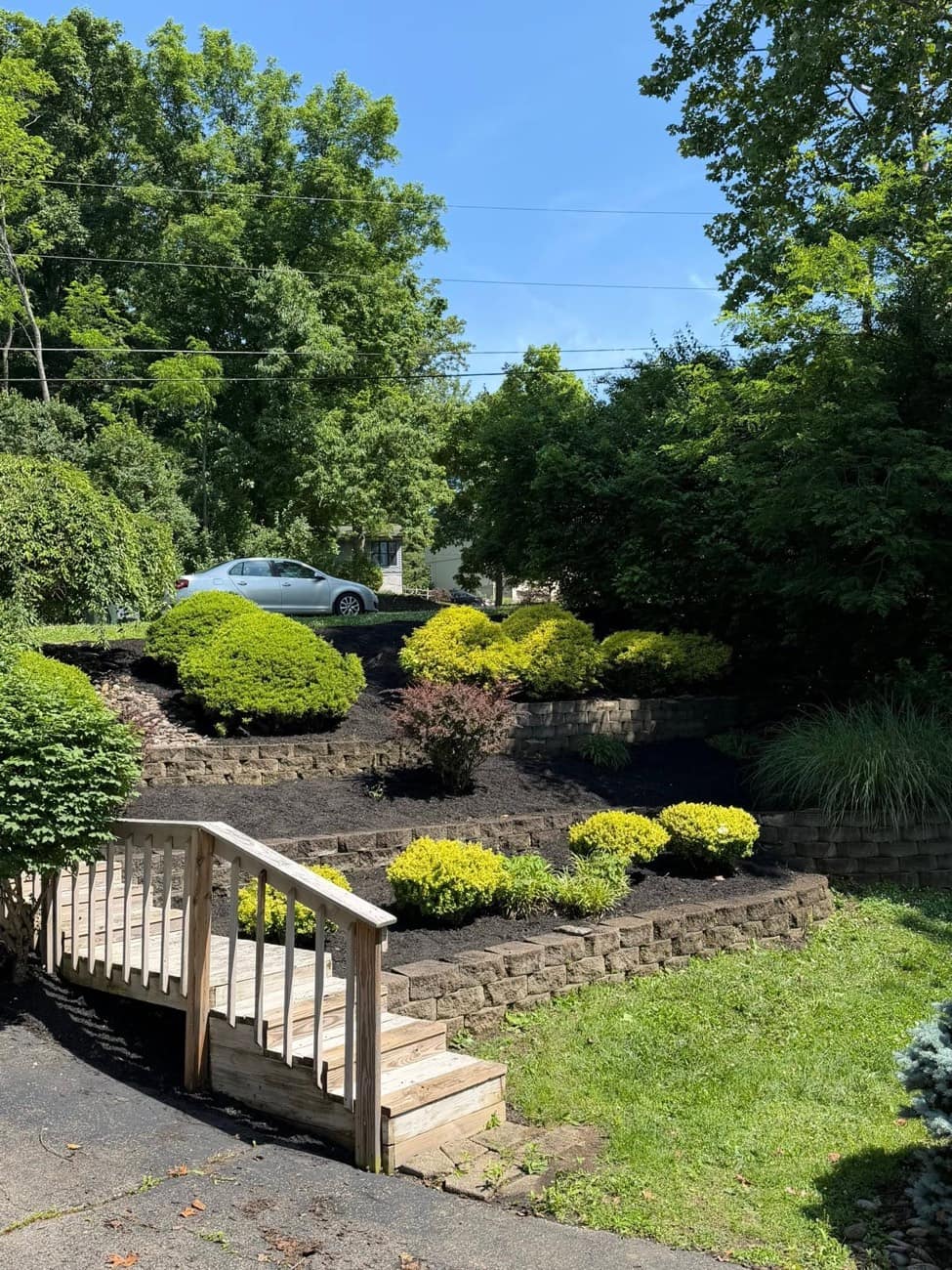
Tell us what the property needs.
Send it over or call — we'll come look, talk it through straight, and give you a number you can trust. No pressure, no runaround.
Call direct(859) 903-4098- 1
Call or send the form
Tell us what's going on with the property.
- 2
Free walk-through
We come look, talk it through straight, and give you a real number.
- 3
We do the work
Done right, cleaned up, and stood behind.