
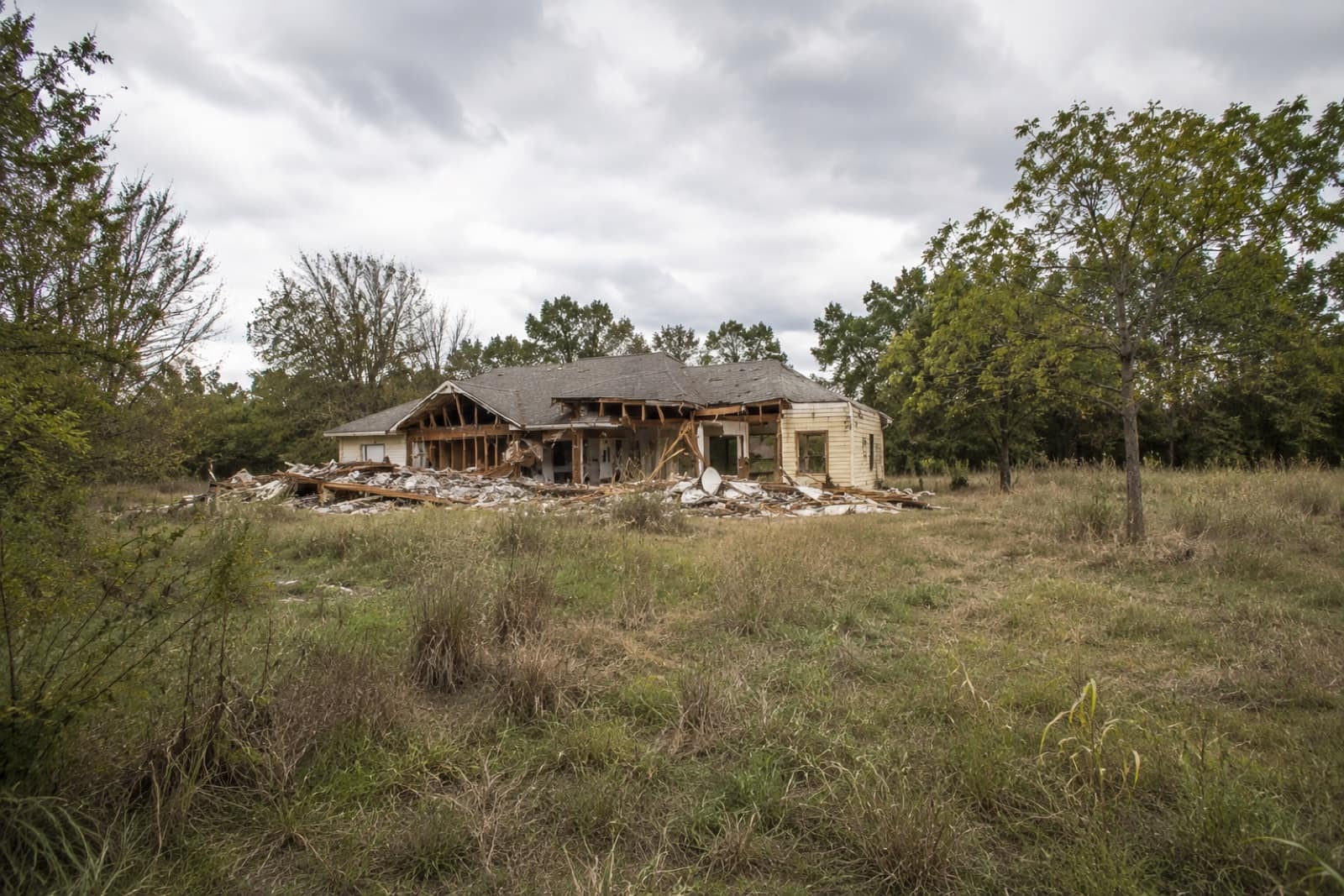
Demolition & Tear-Outs in Northern Kentucky
K&M tears out sheds, barns, decks, concrete and other small structures across Northern Kentucky — taken down safely, sorted, loaded and hauled off, with the ground backfilled and graded for whatever goes in next. Family-owned, licensed and insured, with free on-site estimates.
Demo work we handle.
Sheds & outbuildings
Down, loaded and hauled — including the floor slab, block piers or footings if you want them gone instead of buried under your next project.
Barns & small structures
Leaning, rotted or storm-damaged buildings taken down in a controlled sequence rather than pulled over and hoped for, then cleared to bare ground.
Decks, porches & railings
Old builds stripped off clean down to the footings, with a look at the ledger and siding behind them before the replacement goes on.
Concrete flatwork removal
Slabs, drives, sidewalks, patios and steps broken out and hauled — including the base underneath when the new work needs the depth.
Haul-off & disposal
Salvage, scrap metal and clean concrete separated where it makes sense, the rest loaded to a container or straight to trailers — whichever suits the site.
Backfill & final grade
The hole filled with suitable material and compacted, then graded to drain and finished for what's next — seed, pad or pour.
Done the way this ground demands.
Every property has one eventually: the shed that's done, the barn that leans further each winter, the deck that's soft underfoot, the slab where something used to be. Demolition is the unglamorous first step of most good projects. Doing it right means the debris actually leaves, nothing that was staying gets damaged, and the ground underneath comes out usable instead of cratered.
Old structures rarely come apart the way they look like they will. A shed that reads as a simple push is usually sitting on a slab, block piers or a buried footing. A twenty-year-old deck has rot where the ledger meets the house and posts set in concrete below the frost line. We walk it first so what's under the structure is part of the plan instead of a surprise halfway through.
Before anything comes down, the services have to be dealt with. Outbuildings around here often have a power run, sometimes water — and buried lines rarely follow the path anybody remembers. Demo permits and utility disconnects usually come first; we help you sort out what's needed and who has to sign off. The same planning goes into what's staying: fences, driveways, septic fields, mature trees and the lawn between the structure and the road all need a route for equipment in and out.
Because demo almost always feeds a next step, we work with that step in mind. We also handle grading, land clearing and concrete, so the tear-out, the backfill, the finished grade and the new pour or new build can be one crew across Florence, Union, Burlington, Hebron, Walton and Greater Cincinnati.
Call us when
- A structure is past repair and starting to be a hazard or a liability
- Something has to come out before the new build, pour or fence goes in
- You want the debris gone, not relocated to a pile out back
- A slab, old foundation or set of footings is in the way of the plan
- You bought a property with an outbuilding you'll never use
- Rot or storm damage took a structure far enough that finishing it off is the safe move
From first call to final walk-back.
Free walk-through
We meet you at the property, look at what's coming out and what's likely under it, check how equipment gets in, and agree on where the ground should end up. The estimate comes from that walk — no obligation.
Utilities, permits and protection
Services to the structure get disconnected by whoever is supposed to handle that, and we sort out what permitting applies. Anything staying — fence, drive, lawn, trees, septic — gets protected or routed around first.
Controlled tear-down
The structure comes apart in a planned sequence, not all at once. Salvage and scrap metal get set aside as we go, so what ends up in the truck is only what genuinely has to be disposed of.
Slab, footings and what's under
If the concrete, piers or footings are coming out too, they come out now — along with any buried fill or old debris we find under the building. That's usually where old structures keep their surprises.
Haul-off, backfill and grade
Debris leaves the property. The excavation gets backfilled and compacted, then the ground is graded to drain and finished for whatever's next, with the site raked down instead of left picked over.
What we tear out.
Sheds & outbuildings
Wood, metal and prefab buildings, with or without the floor and footings under them.
Barns & pole buildings
Older farm structures, including leaning and partially collapsed ones taken down under control.
Decks, porches & pergolas
Framing, decking, railings and posts, including footings set below the frost line.
Concrete flatwork
Slabs, driveways, sidewalks, patios and steps broken out and hauled, base included when needed.
Fences & old walls
Failing fence lines and small walls pulled, posts and footings out, line cleared for the replacement.
Interior tear-out
Non-structural walls, flooring, cabinets and fixtures pulled for a remodel — the messy part before the finish trades.
What drives demolition cost
There's no honest way to price a tear-out from a photo or a phone call. What a demo job costs comes down to how much material is coming out, how hard it is to reach, and where the ground has to end up when we're done. We look at all of it on the free walk-through and give you one number.
Size and construction
A light frame shed and a heavy timber barn with a concrete floor are different jobs sharing one word. Framing, roofing, masonry and how the thing was built all change labor and machine time.
Disposal volume and material type
Debris is priced by what it is as much as how much there is. Clean concrete, scrap metal, treated lumber and mixed construction waste don't all go the same place or cost the same to get rid of.
Access to the structure
Equipment needs a way in. An open drive alongside is straightforward; a tight side yard behind a gate, a fence line or a septic field means smaller machines, more hand work and more hours.
Whether the slab and footings come out
Leaving concrete in place is cheaper on the day. Taking it out costs more up front and is the right call when something is getting built there or the grade and drainage have to change.
Utility disconnects and what's buried
Anything with power, water or other services running to it needs those handled before demo. Buried lines and old fill under a structure can add work once they surface.
Site restoration
Backfill, compaction and final grade are part of most jobs. How far you take it from there — rough graded, seeded, or ready for a pour — moves the number.
Take the slab out, or leave it?
It's the most common question on a demo walk-through, and there's no universal right answer. It depends entirely on what's going there next.
Take it out
- Something is getting built, poured or planted where it sits
- The finished grade has to change, or the area needs to drain
- The concrete is broken, heaved or sitting on unknown fill
- You want full use of the ground, not a hard layer a few inches down
Leave it in place
- It's sound and level and can serve as the base for what's next
- Nothing is going there and it isn't affecting how water moves
- The removal budget is better spent on the part of the project you'll see
- It's deep enough that it won't interfere with grading or planting
Demolition across Northern Kentucky.
Serving within 50 miles of Northern Kentucky.
Demolition questions.
Anything else — ask on the walk-through. You'll get the same straight answer either way.
Where does the debris go?
With us. Haul-off is part of the job — the point of demo is that it's gone, not that it moved thirty feet. We separate what makes sense on the way out: salvageable material, scrap metal and clean concrete don't need to take up room in a landfill load, and sorting keeps disposal honest.
Do I need a permit to tear down a shed or barn?
It depends on the structure, whether it sits on a permanent foundation, and your city or county's rules. Demo permits and utility disconnects usually come first on anything with services running to it. We'll tell you what applies to your project on the walk-through and help you sort out who has to sign off.
How much does demolition cost?
It comes down to the size and construction of what's coming out, how much debris there is and what type, how hard the site is to get equipment into, whether the slab and footings come out too, and how finished you want the ground left. That's why we quote from a walk-through instead of over the phone.
What condition is the ground left in?
Backfilled, compacted and graded to what's next — pad-ready, seed-ready or pour-ready, depending on your plan. Tell us where the property is headed and we'll leave it pointed that way. A tear-out that hands you a soft crater and a rut through the lawn isn't finished work.
Do you take out the concrete slab too?
If you want it gone, yes. Slabs, footings and block piers can all come out with the structure. Whether they should depends on what's going there next — we'll give you a straight read on the walk-through rather than selling you removal the project doesn't need.
Can you protect my lawn, driveway and fence during demo?
That's part of planning access. We look at how equipment reaches the structure and gets back out, what it crosses, and what needs matting, routing around, or taking apart and reinstalling. Ruts, cracked driveway edges and clipped fence panels are avoidable with a plan and expensive without one.
What about asbestos or lead paint in an old structure?
Older buildings can contain either, and neither is something to guess at. If there's reason to suspect it, it has to be assessed and handled by the appropriate licensed party before demolition starts. We'll flag it on the walk-through and stop rather than take a chance with it.
Can anything be salvaged?
Often. Barn lumber, metal roofing and heavy timber can be worth setting aside, and scrap metal is worth separating on nearly any job. If you want something kept — the tin, the doors, the beams — say so at the walk-through and we'll pull it out instead of running it through the pile.
Can you do the demo and the work that replaces it?
Usually. We also handle grading, land clearing, concrete and deck building, so the tear-out, the backfill, the finished grade and the replacement can be one crew. Fewer handoffs, and one company accountable for how the whole thing turns out. Residential and commercial both.

Tell us what the property needs.
Send it over or call — we'll come look, talk it through straight, and give you a number you can trust. No pressure, no runaround.
Call direct(859) 903-4098- 1
Call or send the form
Tell us what's going on with the property.
- 2
Free walk-through
We come look, talk it through straight, and give you a real number.
- 3
We do the work
Done right, cleaned up, and stood behind.