
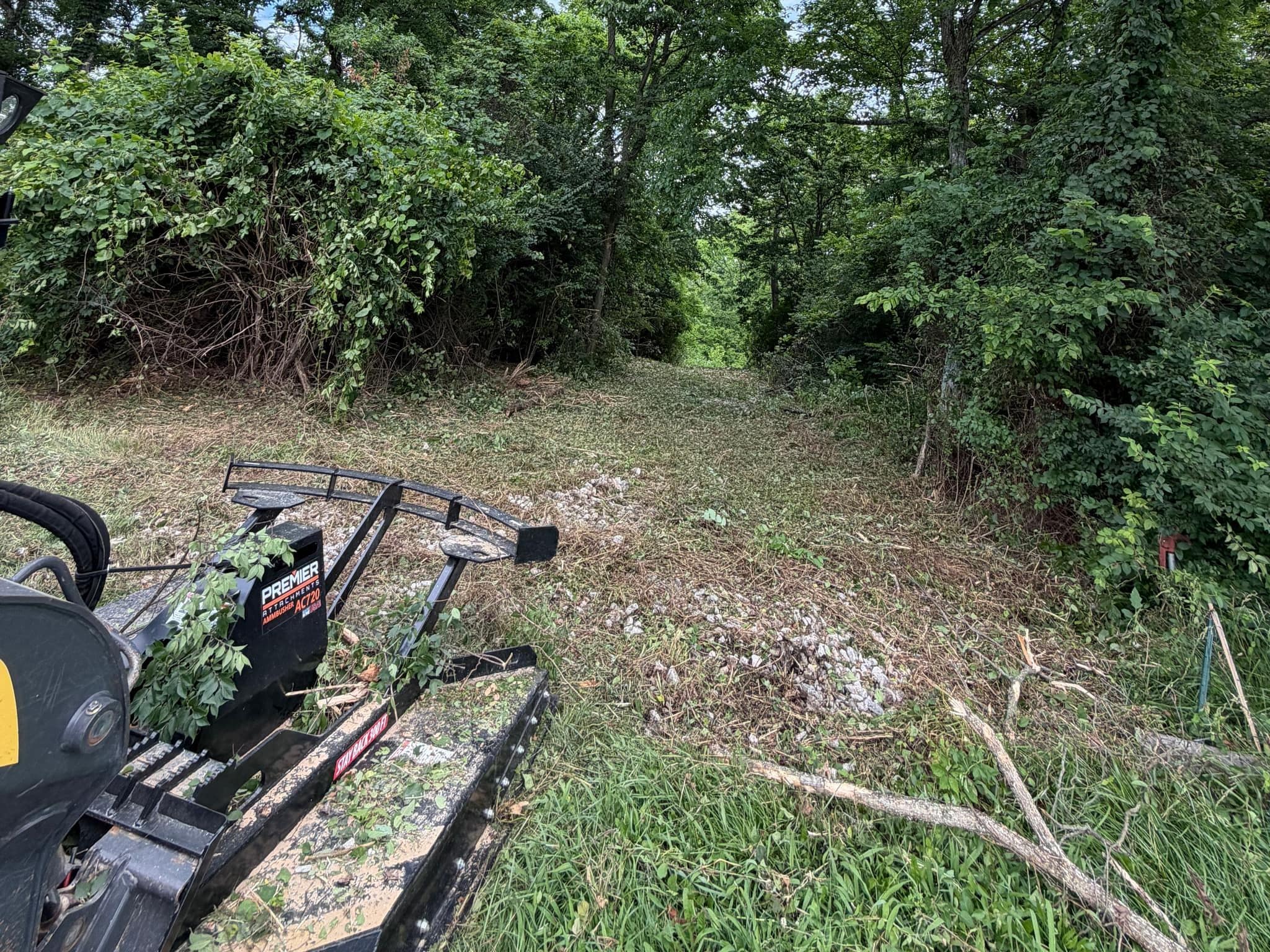
Land Clearing & Grading in Northern Kentucky
K&M clears and grades land across Boone County and Greater Cincinnati — brush, trees, stumps and overgrowth out, debris hauled, chipped or ground on site, and the ground rough-graded so it drains. Raw or overgrown land becomes something you can build on, fence, mow or actually use. Free on-site estimates.
Clearing work we handle.
Lot & site clearing
Brush, undergrowth and trees taken off building sites, barn and shop pads, driveways, or ground you just want back — cleared to the finished state the estimate spells out.
Selective clearing
Not everything has to go. We work around the trees you want kept, stay off their root zones with equipment, and take out what's crowding and shading them.
Stumps & root balls
Ground below grade or excavated and hauled, depending on what goes on top. Building over a buried stump is how you get a settled low spot two years later.
Rough grading
Cleared ground shaped so it drains and equipment can work on it — not left rutted for the next trade to fix on its first day.
Fence-line & boundary clearing
Overgrown lines opened back up wide enough to set posts and run wire, with the brush handled on your side instead of pushed onto the neighbor.
Debris handling
Haul-off, on-site piling, chipping or grinding in place — whichever fits the property and what's allowed. Settled on the estimate before we start, not after.
Done the way this ground demands.
Clearing is the first trade on a site, and everything after it inherits the decisions made here. Boone County has been building fast, and a lot of that ground starts out wooded or brushy. We clear with the end use in mind: what stays, what goes, where the grade needs to finish, and how water will move once the cover is gone.
That last part matters more here than people expect. Northern Kentucky clay sheds water instead of soaking it up, and most of our lots have grade on them. Strip a hillside of brush and root mass and you've stripped what was holding the soil. Clearing that isn't planned around drainage turns into gullies, silt in somebody else's ditch, and a lot you can't drive on after a rain.
What's growing out there matters too. Around Florence, Union and Burlington, and out on the acreage past Walton, it's usually honeysuckle and briars in the understory, cedar and locust in old pasture, and a fence row of mature hardwood older than the house. Each clears differently. Honeysuckle comes down fast and cheap. A hardwood with a root ball the size of a truck bed does not, and pretending otherwise on an estimate is how people end up with change orders.
Call us when
- You're building — house, barn, shop, driveway — on wooded or brushy ground
- Acreage has gone unmanaged long enough that you can't walk it
- A fence line needs to go in, or needs to be found again
- You bought property and want to see what you actually own
- A lot has to be flat, dry and drivable before another trade can start
- Stumps, brush piles or storm debris are left over from someone else's work
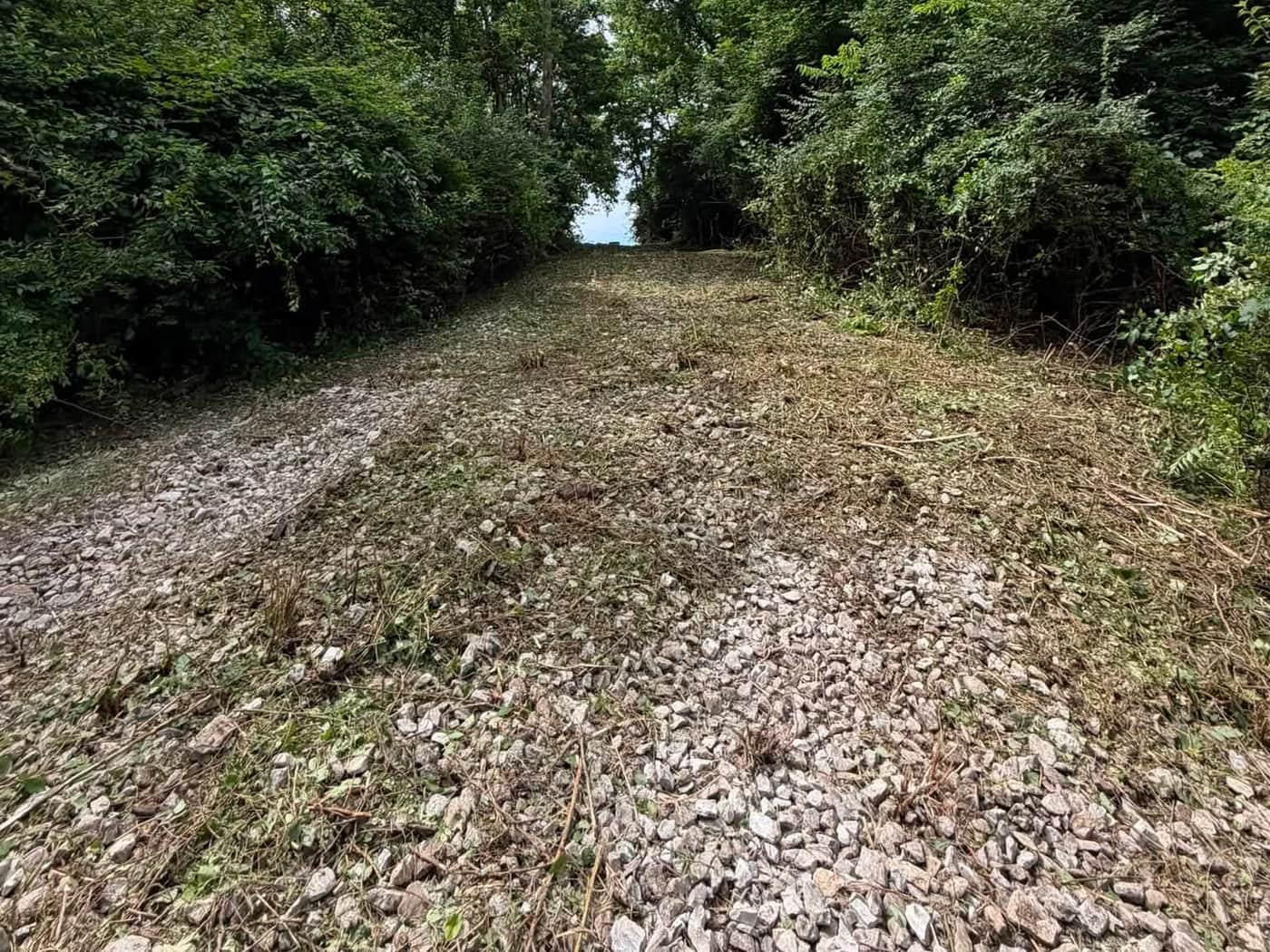
Brush and overgrowth ground down in place instead of hauled off
From first call to final walk-back.
Free walk-through
We walk the ground with you, mark what stays and what goes, and look at access, slope and where water runs. No obligation, no pressure to sign on the spot.
Scope and estimate
The number is tied to a defined finished state: what's cleared, how deep stumps come out, how debris leaves, how far the grading goes. Anything we can't see yet, we say so up front.
Locates and permits
Underground utility locates get called before iron goes in the ground. If your parcel needs a permit or erosion control, we handle that check with the county before work starts.
Clearing and grubbing
Vegetation comes down in a planned order, working with the slope and the weather. Stumps come out to the depth the next use requires — a bush-hogged field and a concrete pad are different standards.
Rough grade and cleanup
Ground shaped to drain, ruts knocked down, the road and entry swept. We walk the finished ground with you and say honestly what needs seed or straw to hold through the first storms.
Where the debris goes.
Haul-off
Material loaded and trucked away. Leaves the cleanest ground and the most options for what's built next, and costs the most because you're paying for trucking and disposal.
On-site burn piles
Cheapest disposal where it's permitted and conditions are safe. Ties the schedule to weather and burn rules, and leaves ash spots that have to be dressed afterward.
Chipping
Brush and limbs run through a chipper, with chips spread, stockpiled for you or hauled. A practical middle ground on residential lots where burning isn't realistic.
Mulching in place
A mulching head grinds standing growth where it stands. No piles, no trucking, and the mulch layer holds soil — but the ground isn't bare, so it isn't the answer under a foundation.
What drives the cost of land clearing
We don't publish per-acre pricing, and you should be careful with anyone who does. An overgrown half acre behind a subdivision house and five wooded acres with a wet-weather creek through the middle are not the same job at any price. What we can do is be straight about what moves the number, so nothing on the estimate is a surprise.
Acreage and density
Not just how big, but how thick. Two acres of light brush can clear faster than a half acre of tight, mature growth with vines woven through everything standing.
Tree size
Mature hardwood takes longer to fell, buck and move than scrub and saplings. Big trees near a house or a line also mean rigging instead of dropping, and rigging is time.
How stumps are handled
Leaving them, grinding below grade, or excavating the whole root ball are three different prices. What's going on top afterward decides which one you actually need.
Where the debris goes
Haul-off means trucks, disposal and time. Piling or burning on site is cheaper where it's permitted and safe. Mulching in place skips hauling but leaves a mulch mat, not bare dirt.
Access
If a trailer and a loader can get in, work moves. Narrow gates, a steep drive, soft ground or a septic field we can't cross means smaller equipment and more hours per acre.
Slope and ground condition
Hillsides slow everything down and demand more care with erosion. Saturated clay in early spring can shut a site down — timing the job for drier ground often saves real money.
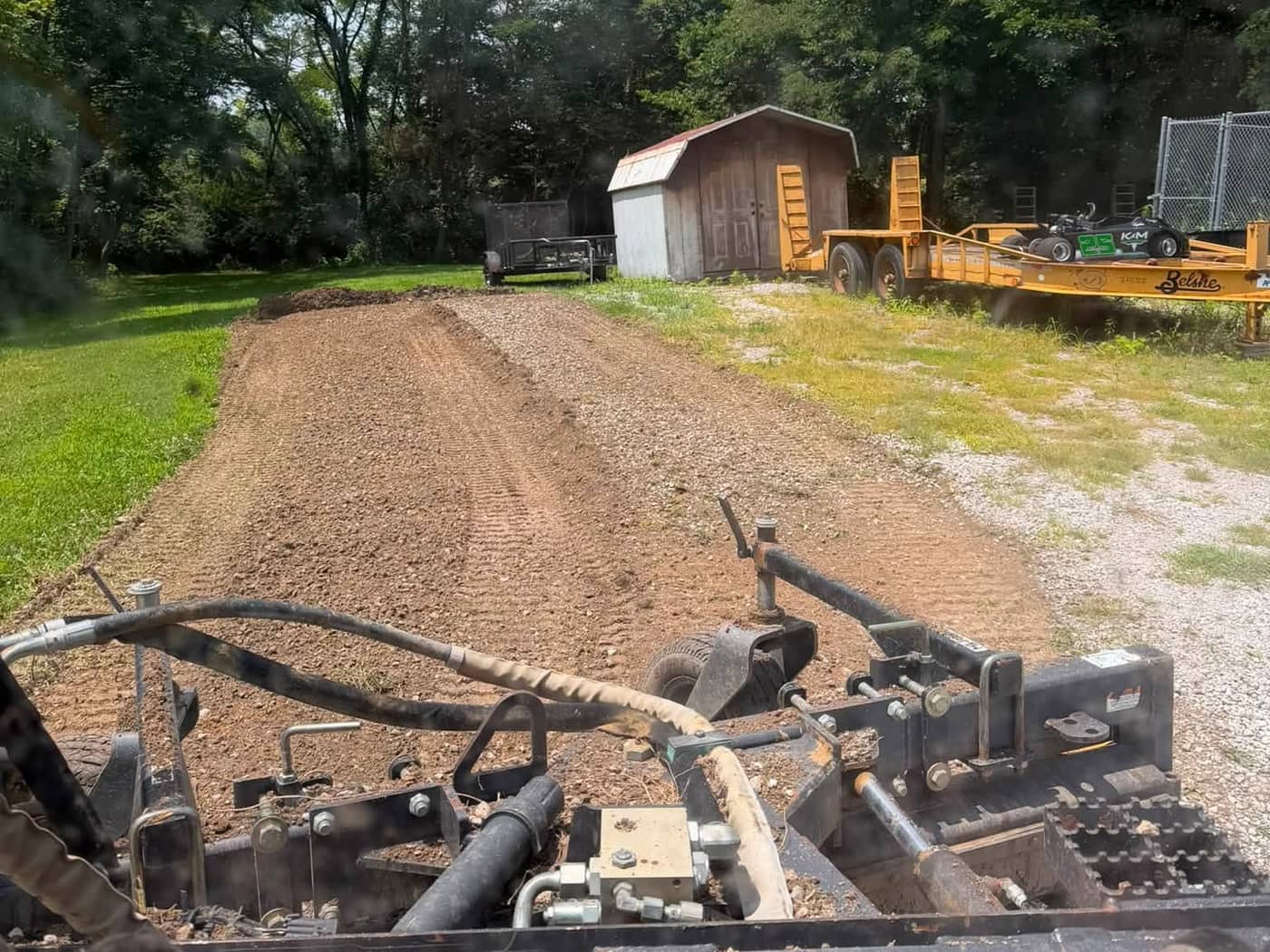
Base graded and shaped with our own equipment
Land clearing vs. forestry mulching
These two get used interchangeably and they shouldn't be. They leave the ground in genuinely different states, and the right one depends on what happens next. We do both, so we have no reason to steer you.
Land clearing — removal
- Vegetation, stumps and root balls come off the site — hauled, chipped or burned
- Leaves bare, gradeable ground you can build on, pour on or shape
- Rough grading and drainage are part of the same job
- Costs more — you're paying for excavation, trucking and disposal
- Bare soil erodes until it's stabilized, so seed, straw or matting usually follows
- Right call for building pads, driveways, septic areas and anything engineered
Forestry mulching — ground in place
- Standing growth is ground where it stands and left as a mulch layer
- No burn piles, no trucking, usually one machine and one operator
- Soil structure stays intact and the mulch mat slows erosion and regrowth
- Stumps stay in the ground, cut flush rather than removed
- Often faster and cheaper per acre on brush and small-diameter growth
- Right call for pasture reclaim, trails, hunting lanes, fence rows and sight lines
Land Clearing across Northern Kentucky.
Serving within 50 miles of Northern Kentucky.
Land Clearing questions.
Anything else — ask on the walk-through. You'll get the same straight answer either way.
What's the difference between land clearing and forestry mulching?
Clearing removes vegetation — brush, trees, usually stumps — hauls, chips or burns it off the property, then grades the ground. Mulching grinds what's standing into a mulch layer in place, leaving stumps and soil intact. Clearing gives you bare, buildable ground. Mulching gives you reclaimed, walkable ground faster and usually cheaper.
How much does land clearing cost per acre in Northern Kentucky?
There's no honest per-acre number, because acreage is only one input. Density of growth, tree size, whether stumps get ground or dug out, how debris leaves, equipment access and slope all move the price — often more than the acre count does. We walk the ground free and quote what's actually there.
Do you remove stumps, or just cut the trees down?
Both, depending on what you need. Stumps can be left low, ground below grade, or excavated with the root ball and hauled. What goes on top decides it — a pad or a driveway needs them out, a field you'll bush-hog usually doesn't. We settle that on the estimate.
What happens to all the brush and trees you cut?
Whatever you and the site allow. Material can be hauled off for the cleanest finish, chipped and spread or stockpiled, piled and burned where that's permitted and safe, or ground in place. Haul-off costs the most and leaves the best ground. The method goes in the estimate.
Do I need a permit to clear land in Boone County?
Sometimes. It depends on the acreage, the location, whether you're disturbing soil near a stream or drainage way, and what your city or county requires — the rules aren't identical across Northern Kentucky and Greater Cincinnati. We check what applies to your parcel before work starts and tell you what it means for the schedule.
What's the best time of year to clear land in Kentucky?
Late fall through winter is usually best. Leaves are down so you can see the ground and the property lines, growth isn't pushing back, and firm or frozen ground carries equipment without rutting. Clay in early spring is the hard case — soft and slow. We clear year-round and time the work to the weather.
Will clearing cause erosion problems?
It can, and that's the part people plan for least. Stripping cover off Kentucky clay on a slope means water now runs across bare ground instead of through roots. That's why grading and drainage are part of the job, not an add-on, and why we'll tell you what needs seed, straw or silt fence to hold.
Can you clear a lot on a hillside?
Yes, and most of what we clear around here has grade on it. Hillsides take more planning: the order things come down in, keeping equipment stable off soft ground, and a plan for exposed soil before the first hard rain. Slope also affects price, because everything moves slower.
Can you make a sloped lot buildable?
We handle clearing and rough grading — vegetation off, ground shaped so it drains and equipment can work. That covers most yards, pads, drives and pasture. If your project needs an engineered pad, compaction testing or a stamped drainage plan, we'll tell you on the walk-through where our scope ends and an engineer's begins.
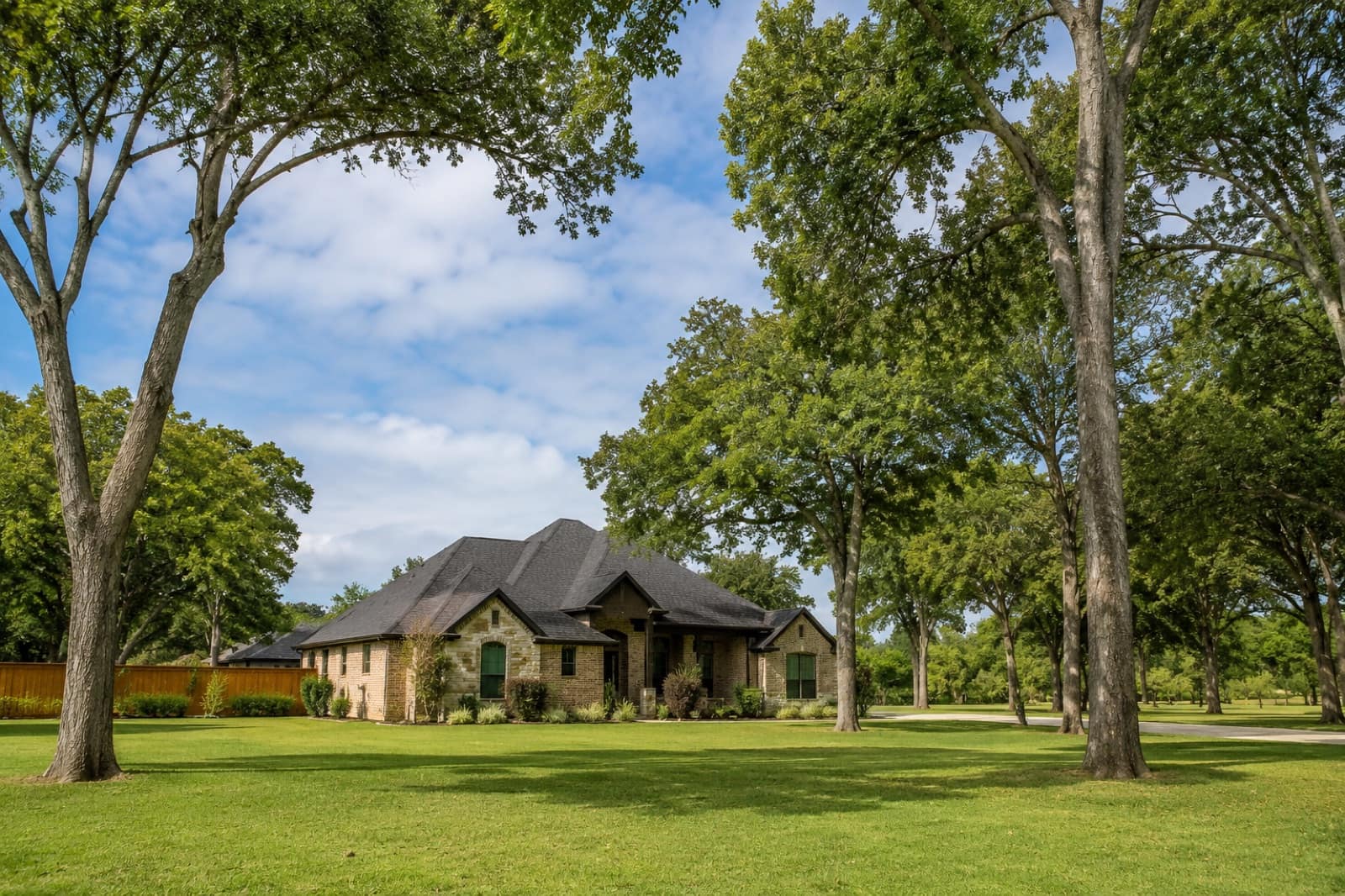
Tell us what the property needs.
Send it over or call — we'll come look, talk it through straight, and give you a number you can trust. No pressure, no runaround.
Call direct(859) 903-4098- 1
Call or send the form
Tell us what's going on with the property.
- 2
Free walk-through
We come look, talk it through straight, and give you a real number.
- 3
We do the work
Done right, cleaned up, and stood behind.